
CASE STUDY
Warner Chappell, The Chappell
High-performance writing rooms within a historic Kensington building
Client: Warner Chappell Music
Location: Kensington, London
Completion: 2018
Spaces delivered: Three writing rooms, breakout lounge and kitchenette
Services: Studio design, build and technical installation
Project overview
-
Recording Rooms was appointed by Warner Chappell Music, the publishing division of Warner Music Group, to evaluate and develop a potential writing facility within their Kensington Court building. Following initial discussions and a review process, the project was approved.
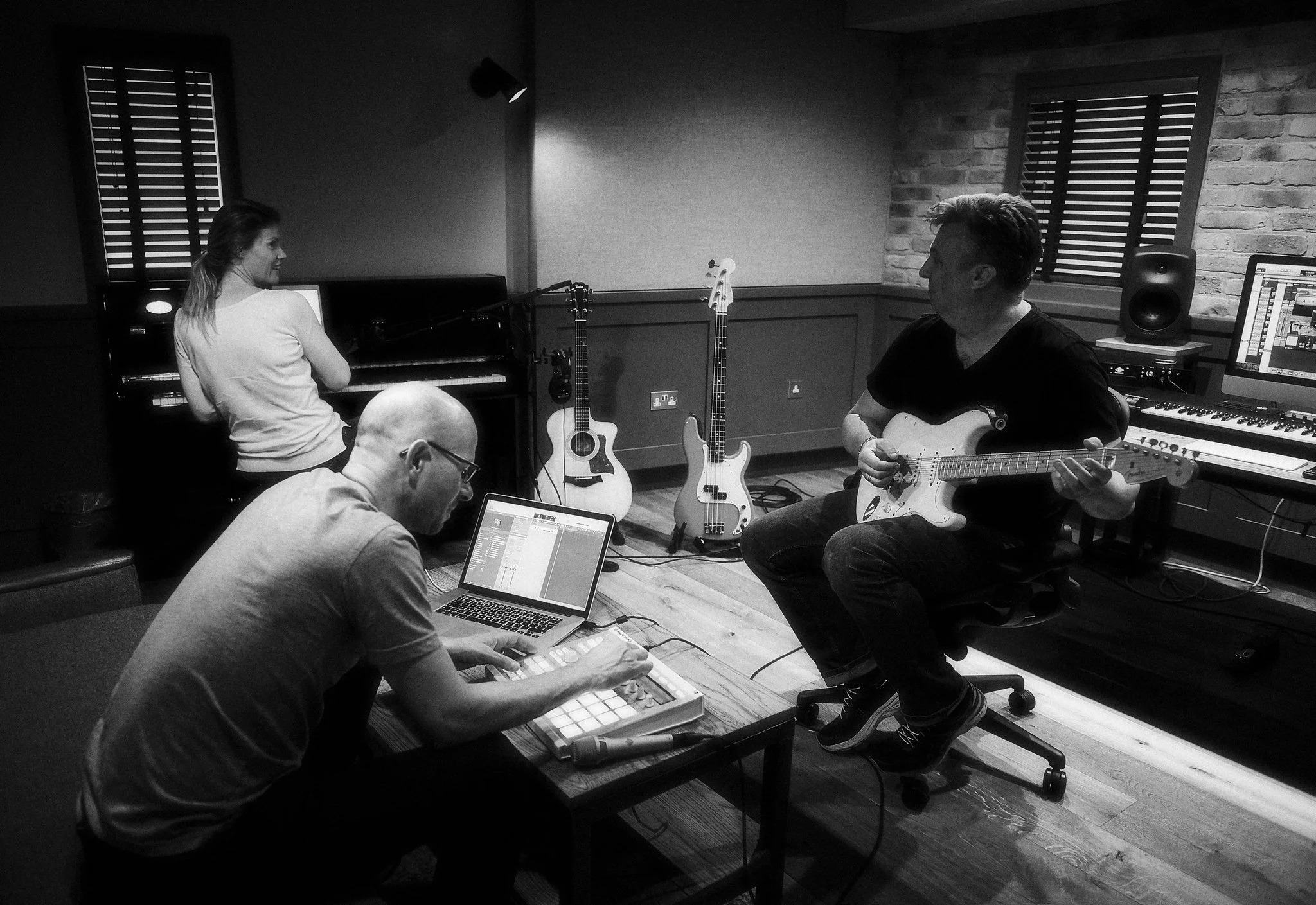
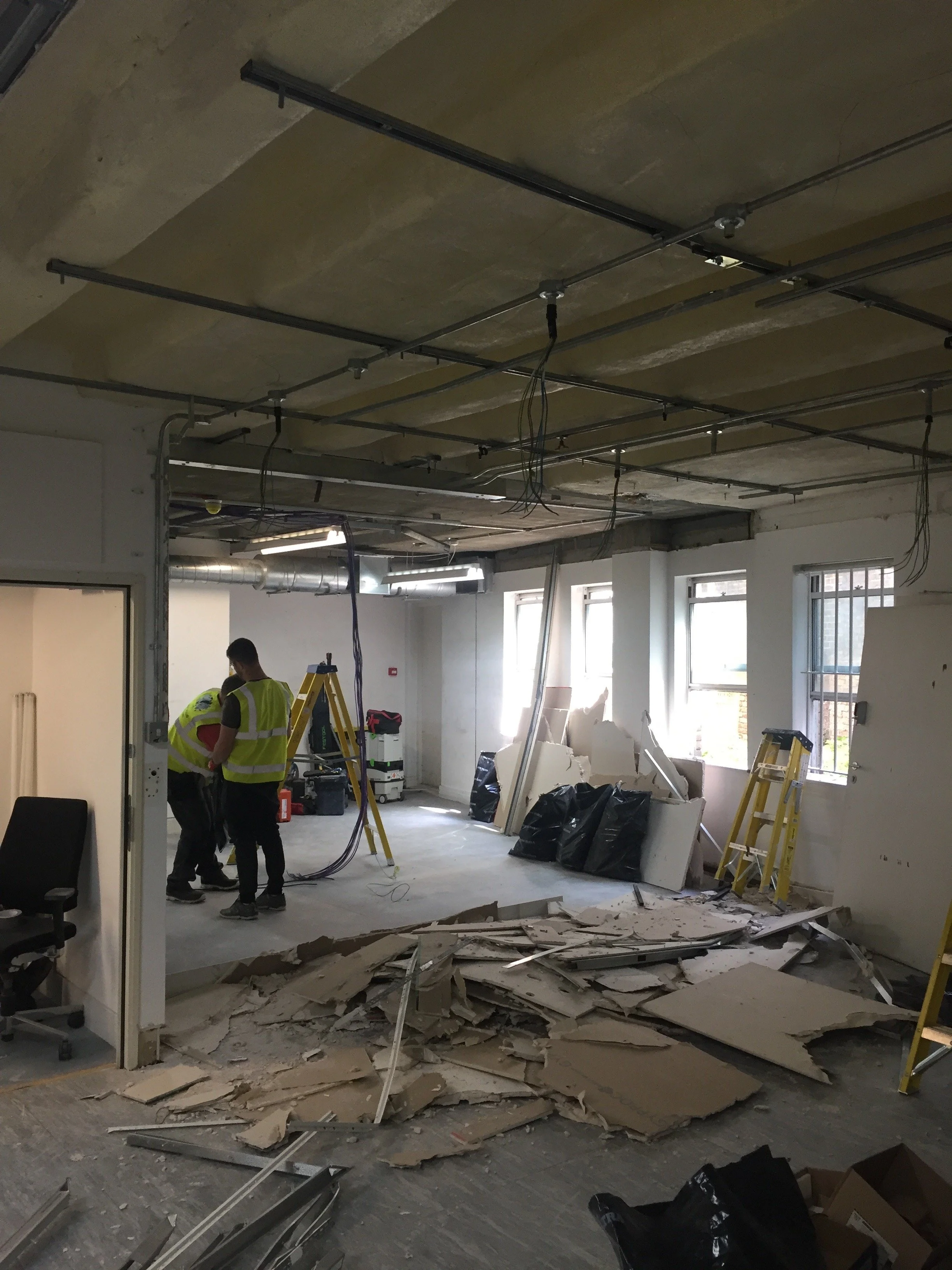
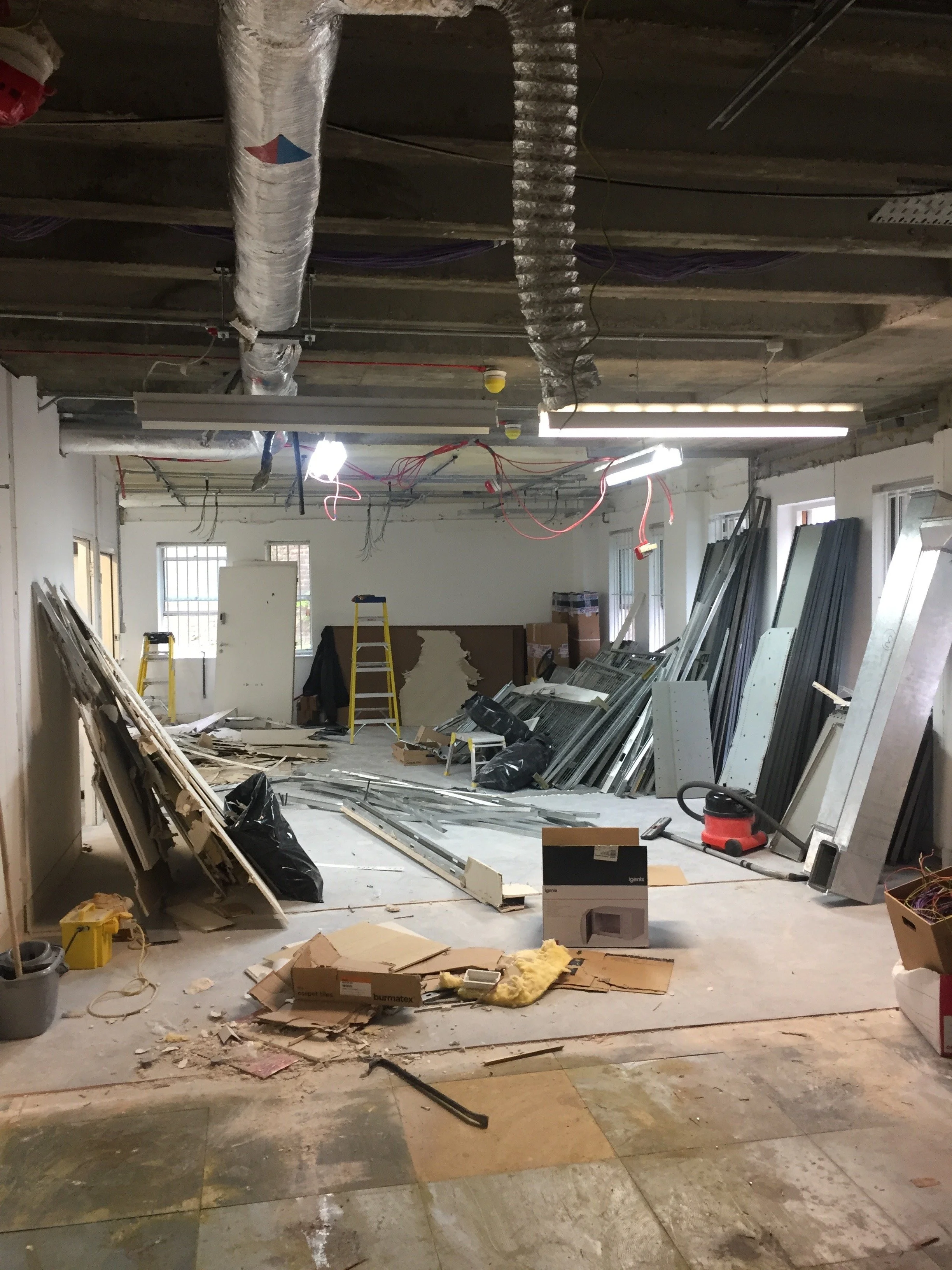
The brief centred on creating a comfortable, accurate and flexible writing environment for writers, artists and producers. The project transformed the building’s former basement archive into a creative space that could support writing camps, production sessions and informal collaborative work.
-
Warner Chappell Music is the global music publishing arm of Warner Music Group. With a history stretching back more than two centuries, the company represents an extensive roster of songwriters along with a catalogue that spans contemporary releases, iconic standards and major works across multiple genres.
Operating from offices in more than 20 countries, Warner Chappell provides creative support, rights management and development opportunities for its writers and copyright holders.
-
The existing 2,000 sq ft basement had long served as the publisher’s archive, housing decades of recorded music, test pressings, correspondence and first edition scores. Warner Chappell wanted to convert this area into a three room writing and production facility supported by a relaxed lounge and kitchenette.
Performance expectations were clear. The rooms needed to provide accurate, predictable monitoring, isolation appropriate to the host building and proposed layouts, and a considered interior scheme aligned with Warner Chappell’s creative identity.
-
Electric Lighting Station, 46 Kensington Court, was built in 1888 as one of London’s earliest electric power stations, serving the new Kensington Court residential development. Designed for engineer R. E. B. Crompton and attributed to architect J. A. Slater, the building retains its original stone plaque and red brick façade.
After supplying local lighting until around 1900, it was repurposed over time and is now Grade II listed for its importance in the early history of electrical infrastructure. Today the site accommodates Warner Chappell’s offices and studio spaces, providing a distinctive late Victorian setting for a contemporary writing facility.
Design Approach
The priority was to deliver three production rooms that felt accurate, comfortable and consistent for Warner Chappell’s roster. The basement constraints, including existing services, structural form and neighbouring occupancy, required an isolation strategy and a construction approach that remained predictable in use.
Vocal booths were omitted to allow the footprint to support larger rooms and a practical lounge area. This aligned with the client’s aim for a comfortable environment suitable for longer sessions.
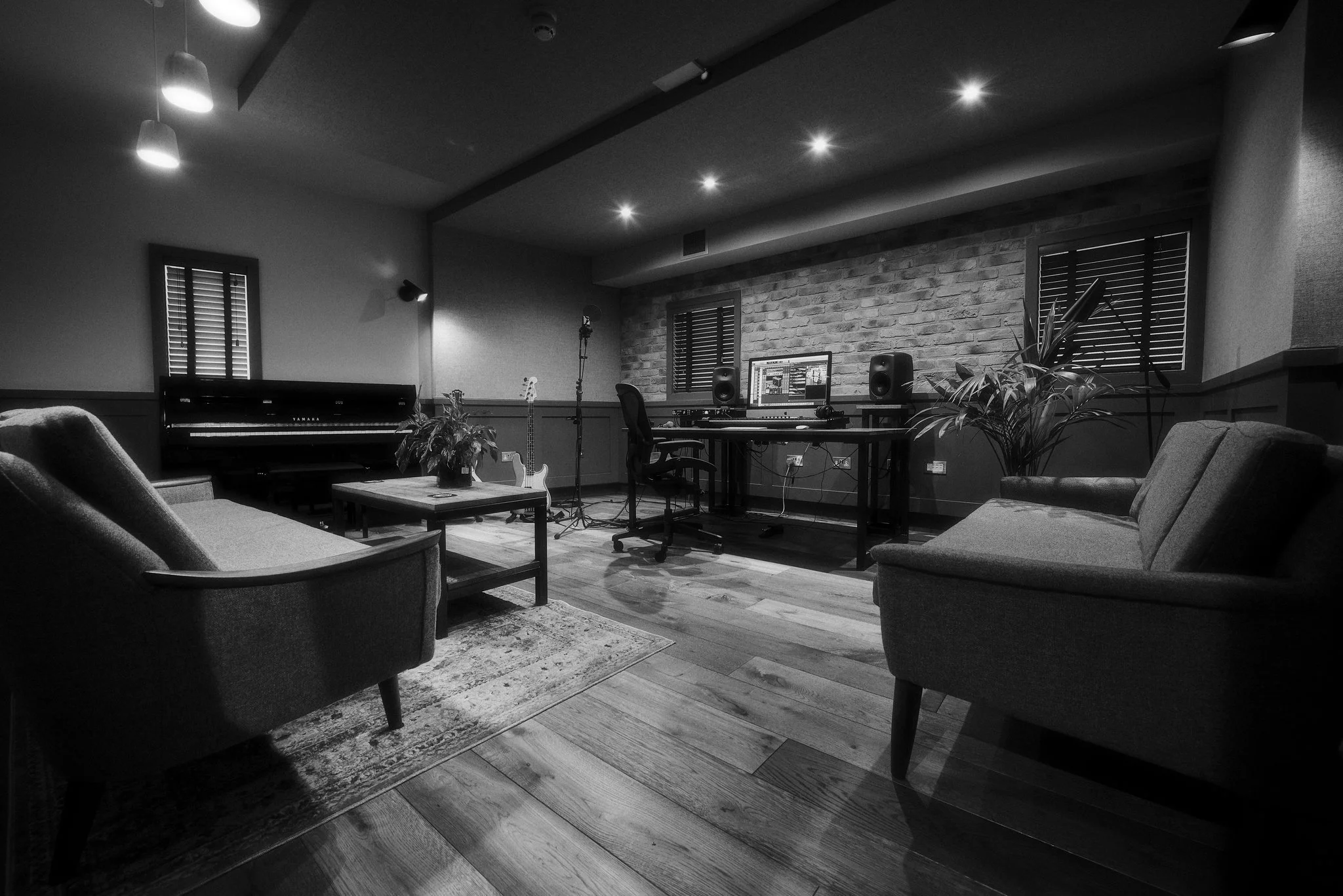
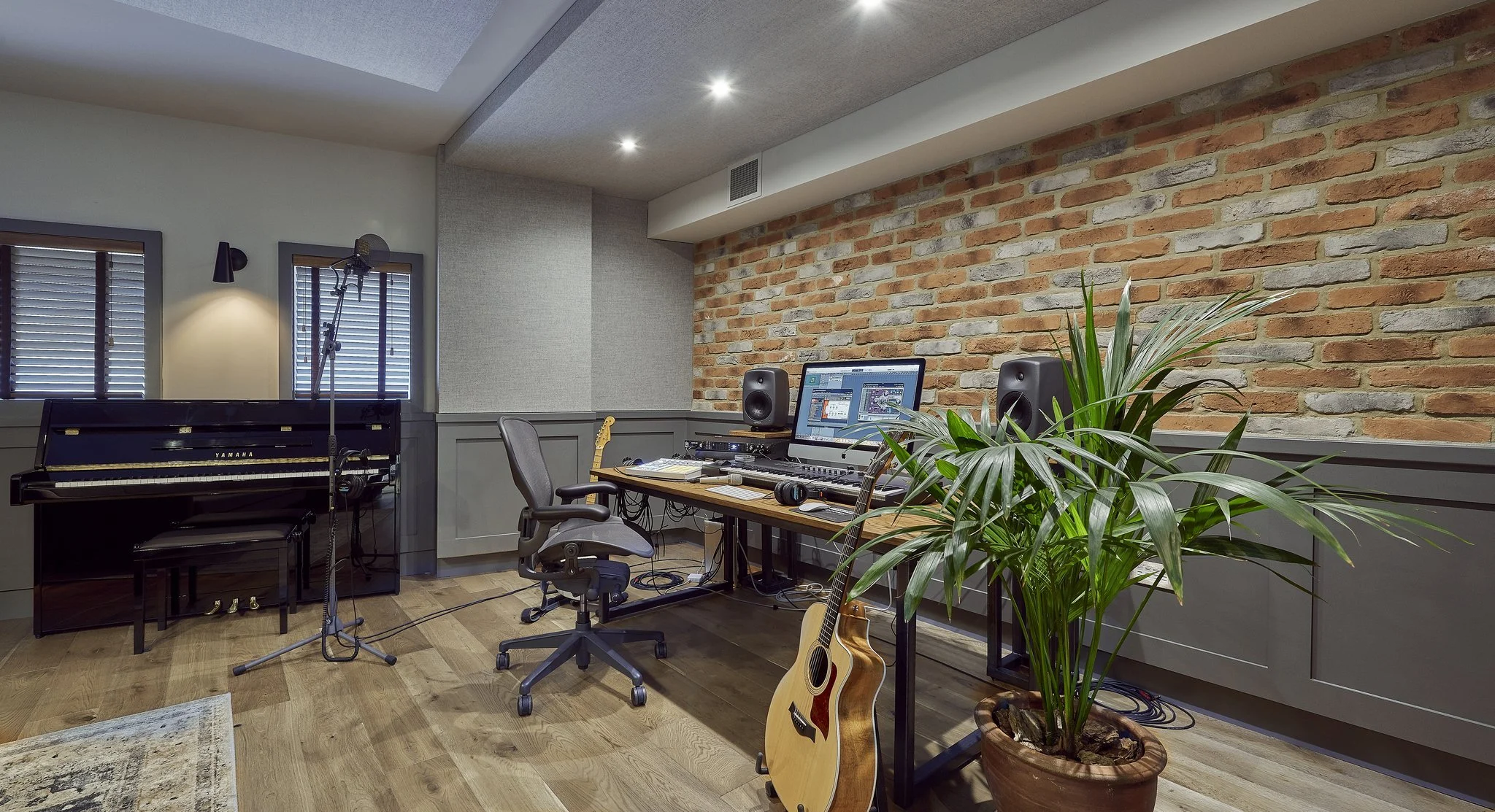
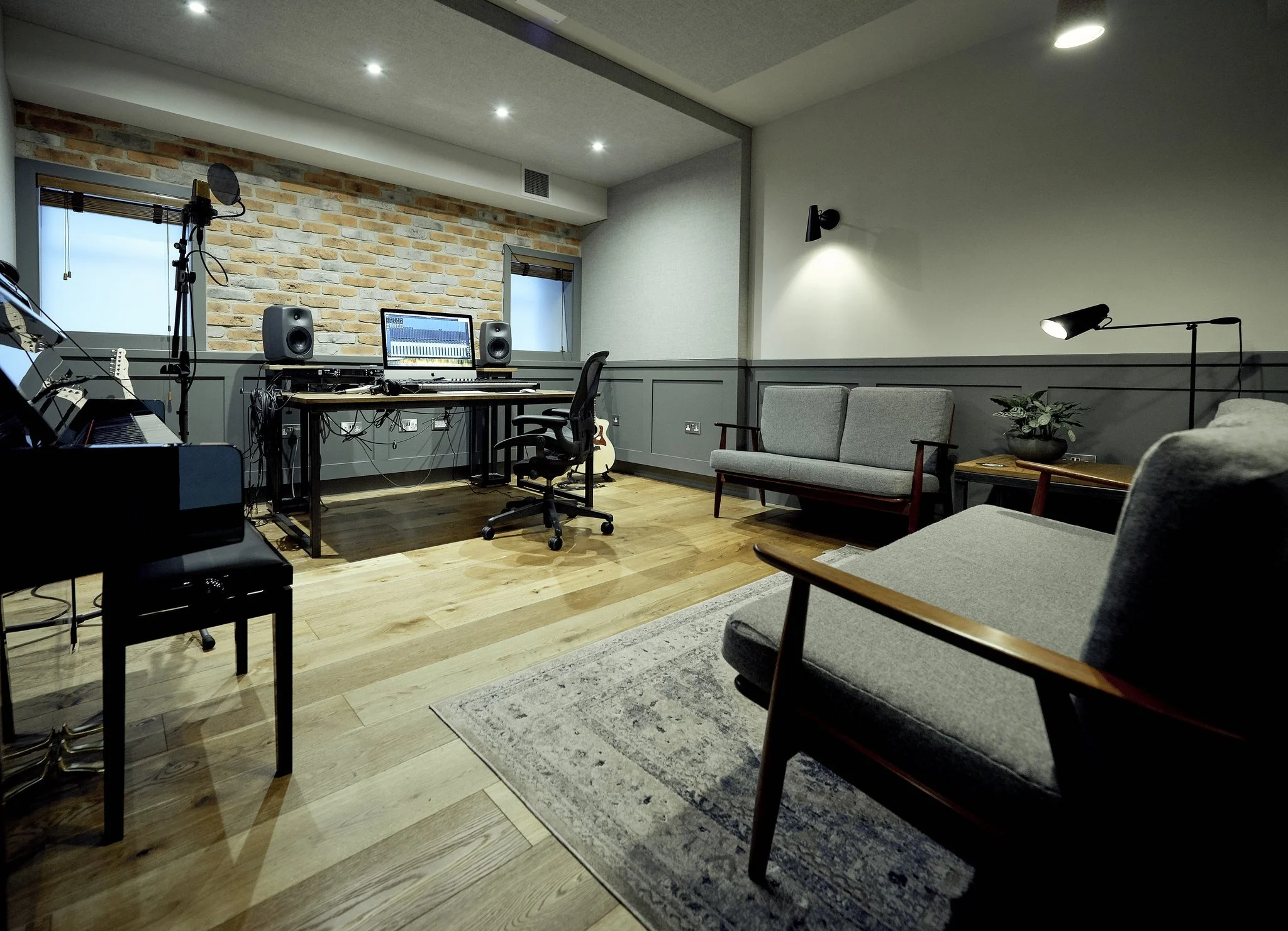
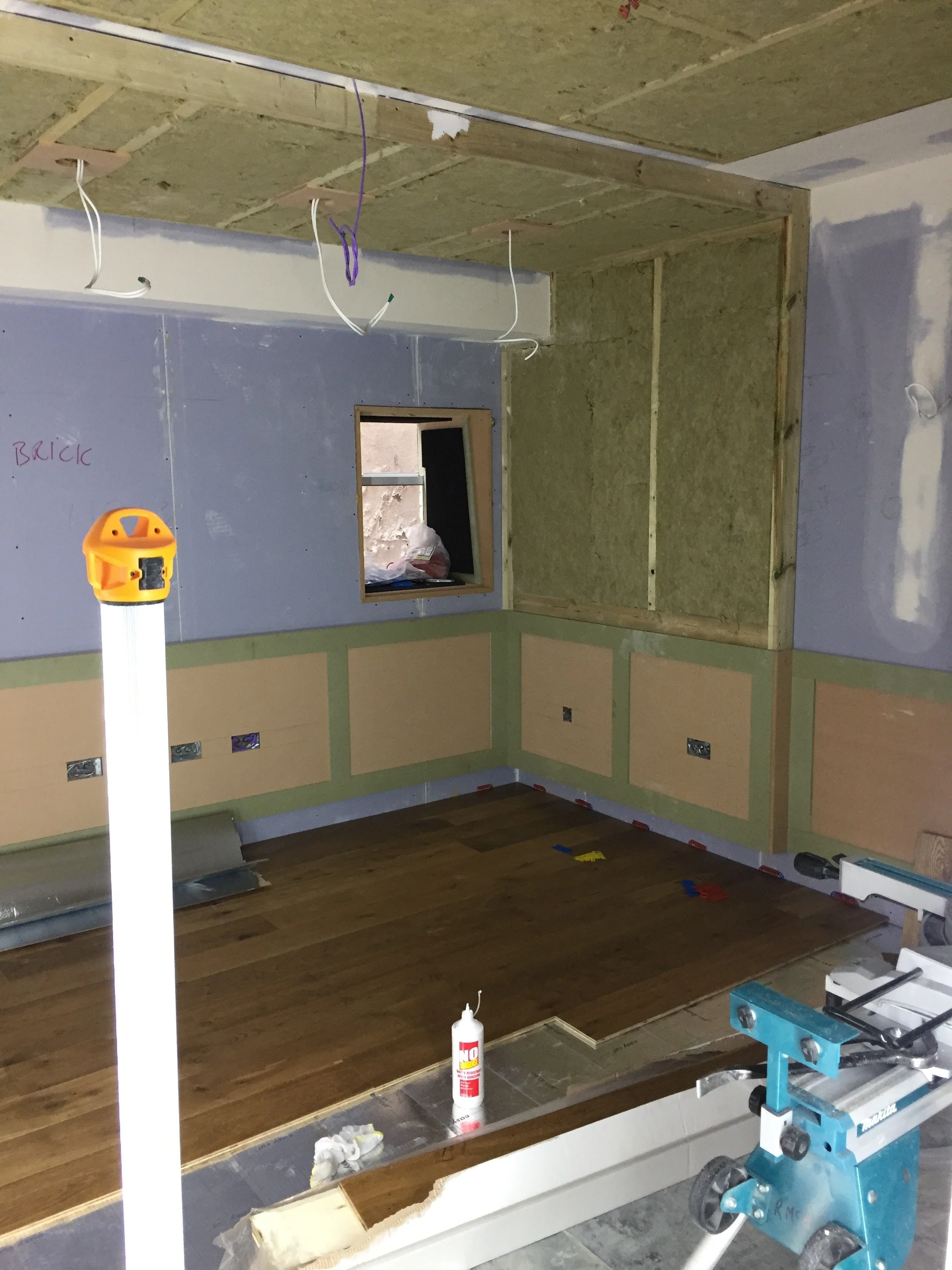
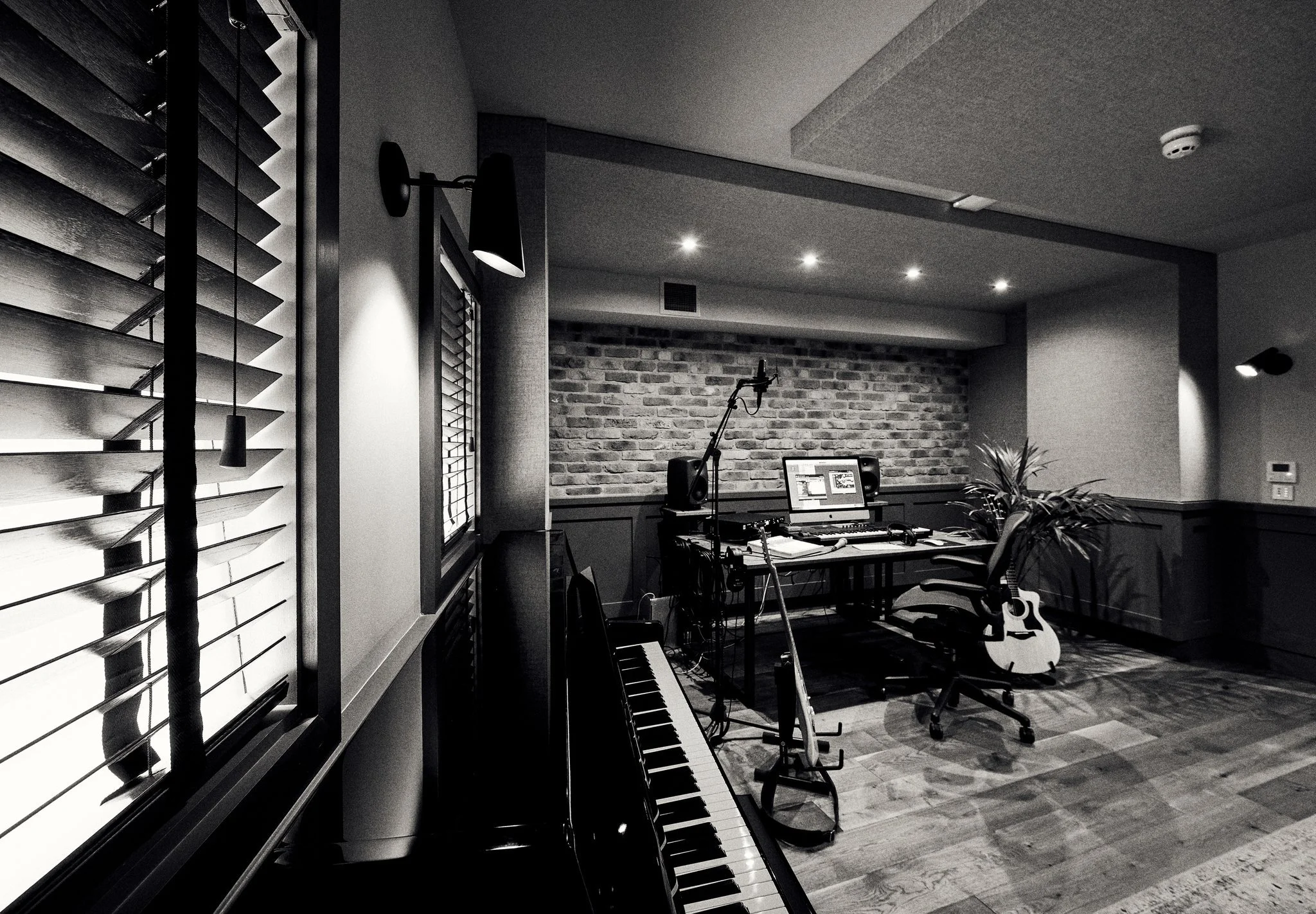
The visual brief referenced classic listening rooms. Timber panelling, warm finishes and a restrained palette were developed to meet the acoustic requirements without adding technical noise to the interior.
“The finished studios more than exceed my expectations, both in quality, comfort and sound they went beyond my original spec whilst remaining within budget.”
Mike Smith, Managing Director, Warner Chappell Music
-
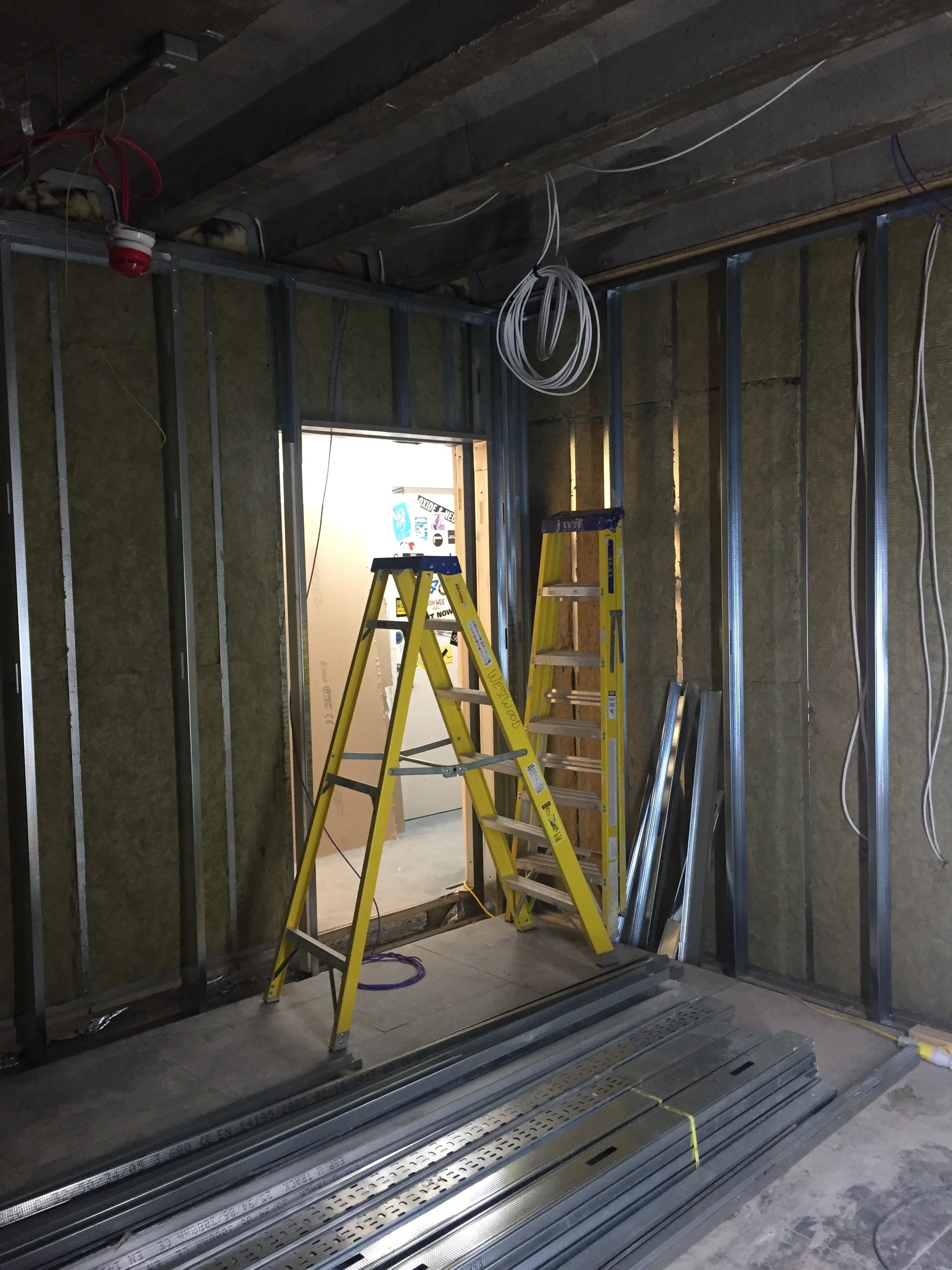
All isolation elements were built as independent structures. Partition shells were taken from floor slab to soffit without rigid connections, reducing transmission paths between rooms and to offices above, and limiting potential flanking paths. Ceilings were suspended on anti vibration hangers and all junctions were sealed for airtightness.
The existing raised access floor was retained due to building wide power and comms distribution. Detailing was developed to maintain its function while supporting the acoustic objectives.
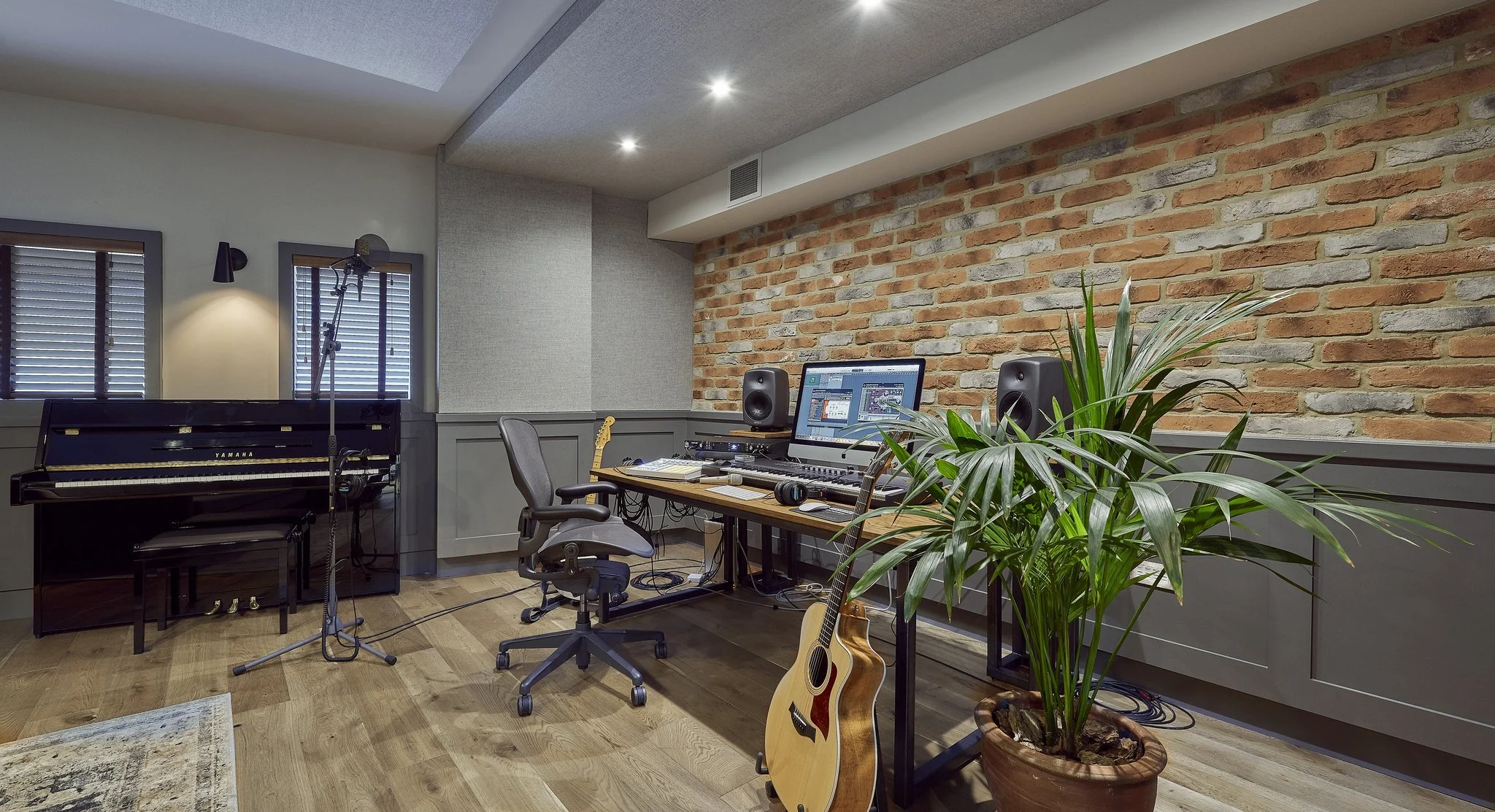
Room treatment combined broadband absorption, controlled early reflection management and targeted frequency selective elements behind the timber finishes. Treatments were integrated into the architecture so the rooms presented clean, consistent environments without visible technical clutter.
-
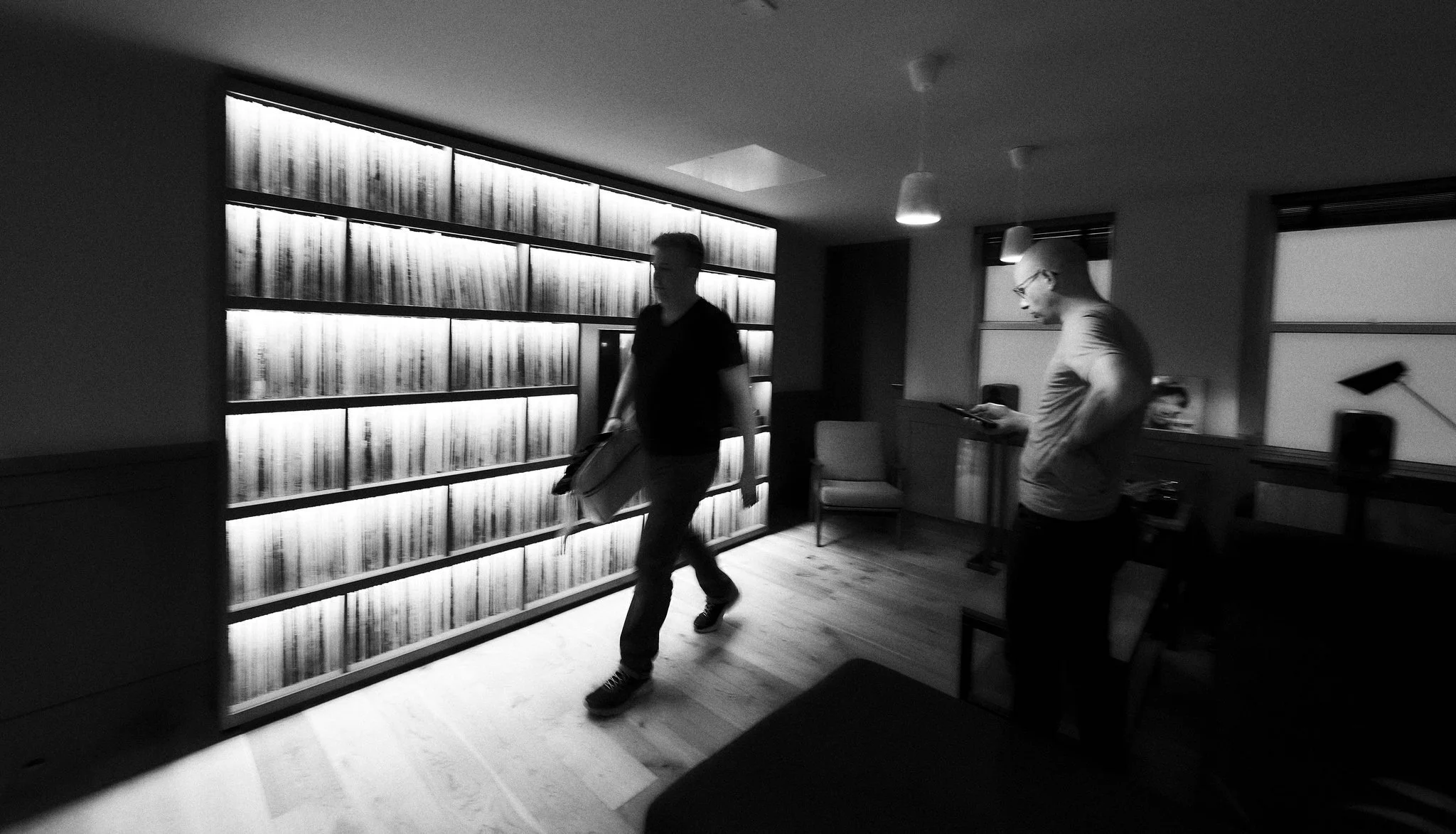
The archive history informed the interior. A custom full height vinyl wall capable of holding more than 2,000 records was introduced in the lounge, with integrated lighting and a small listening area to support reference work and informal discussion.
The lounge included soft seating, timber furniture and a kitchenette, creating a practical space for breaks and collaborative planning between sessions.
Within the writing rooms, brick slips, wood panelling and fabric finishes were balanced with acoustic requirements so the rooms retained a clear aesthetic identity while remaining technically controlled.
-
Key conditions shaped the approach:
The basement carries building services including comms and electrical risers, and the access floor needed to remain operable.
Surrounding offices and residential properties required careful airborne and structure borne noise control.
The footprint was asymmetrical, with adjacent plant areas, so room orientation and isolation thicknesses were adjusted accordingly.
The interior needed to remain unified and calm while concealing significant treatment and mechanical systems.
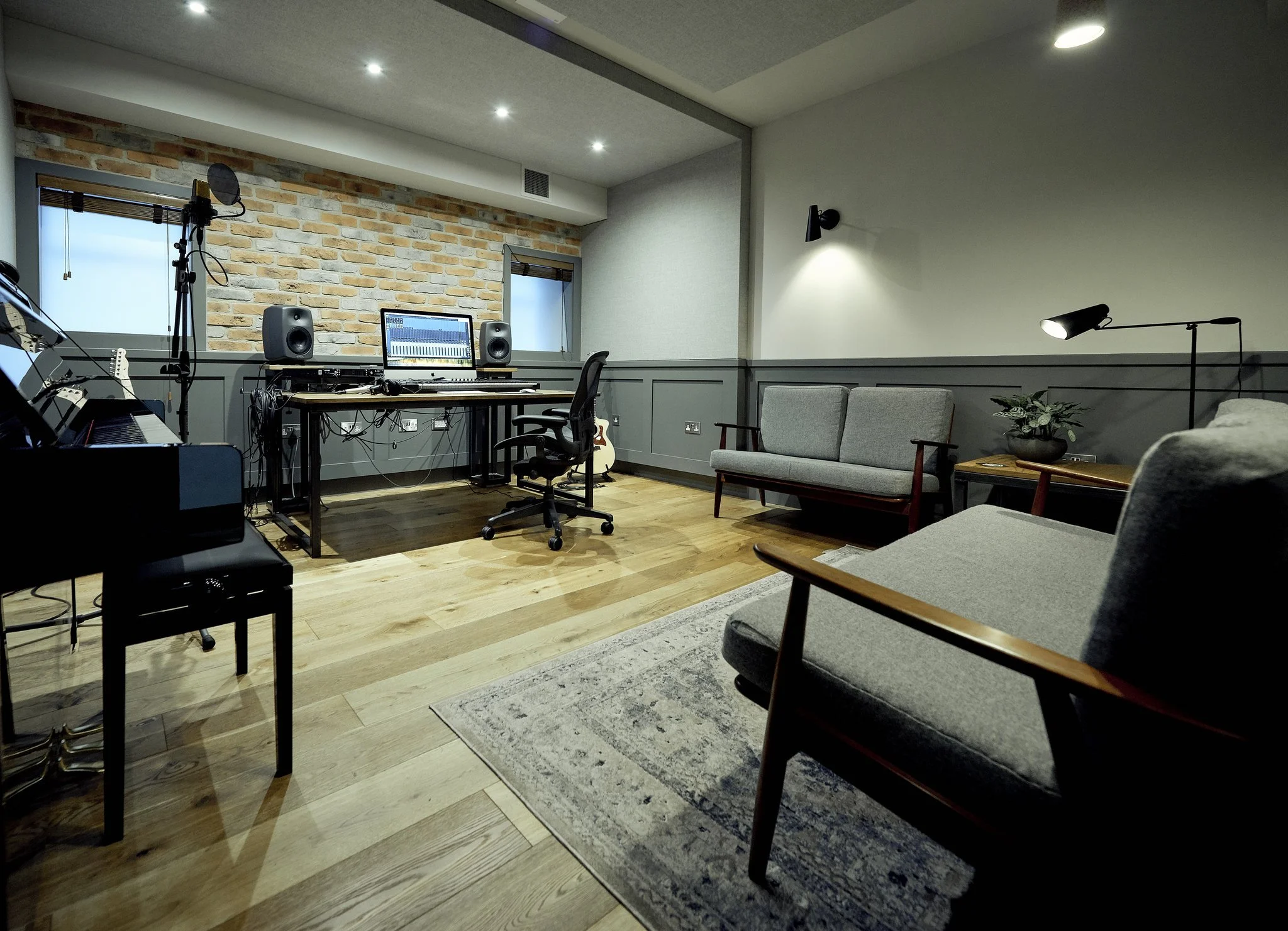
Highlights and outcome
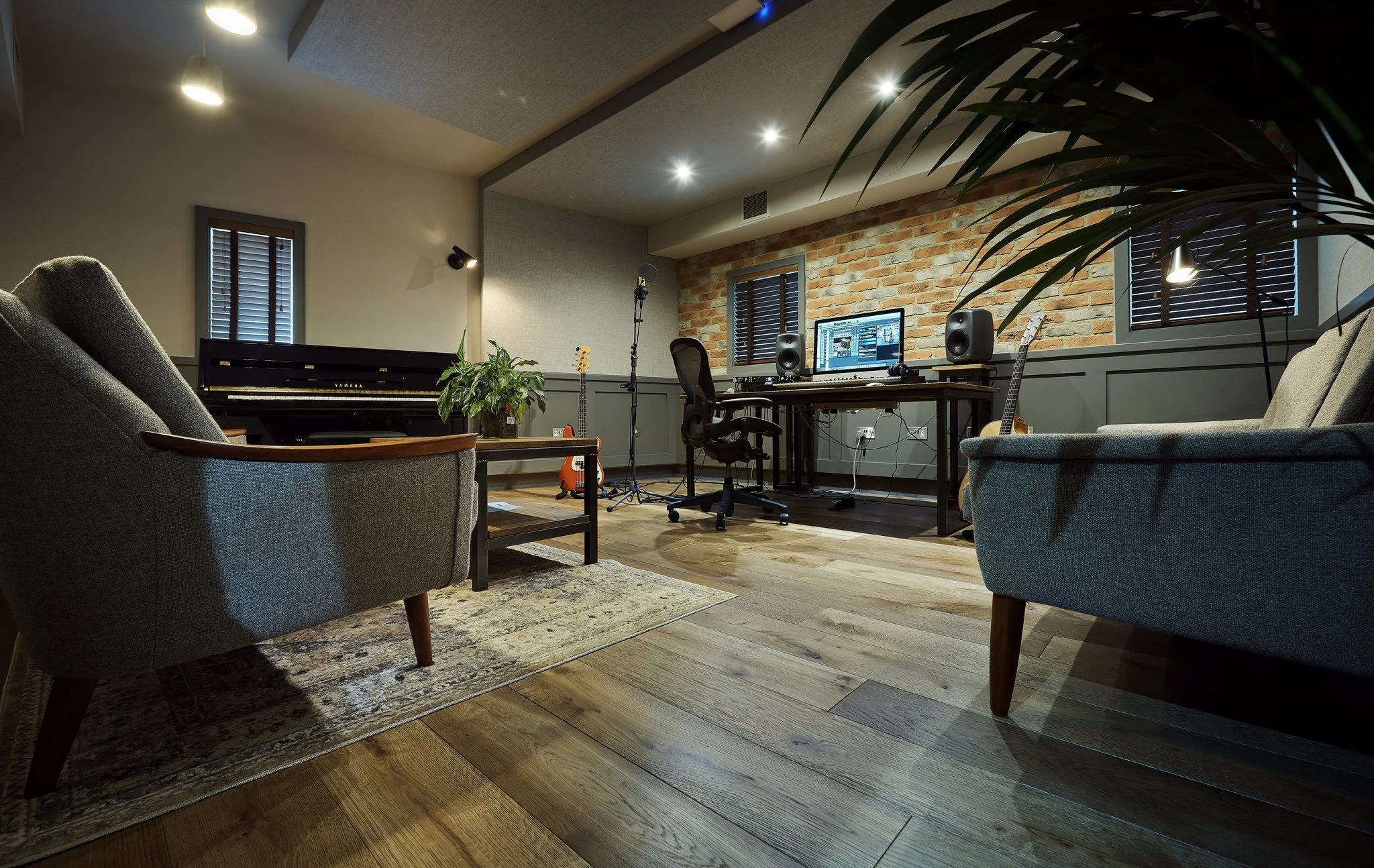
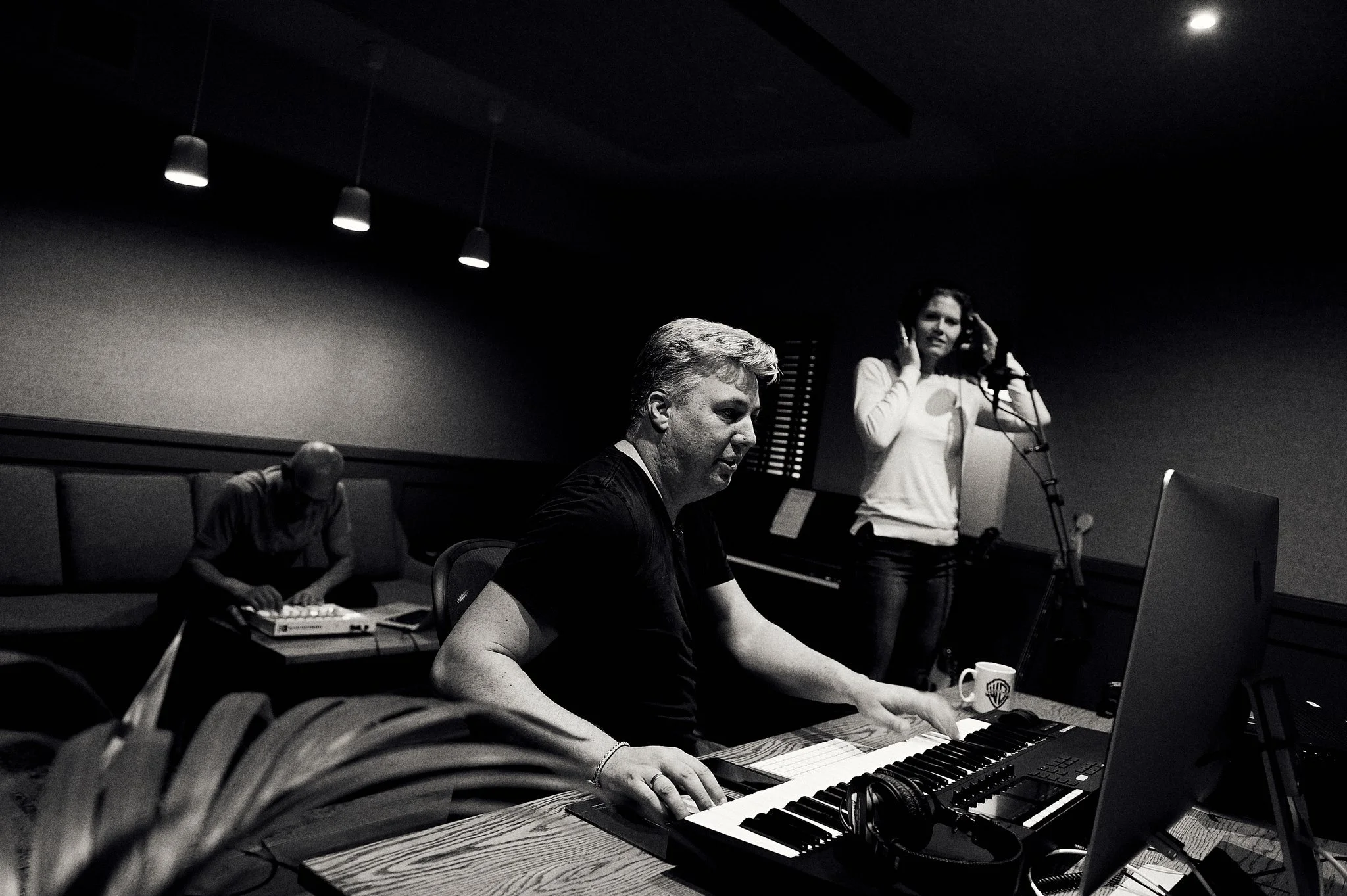
The rooms delivered controlled monitoring, low noise levels and a consistent experience across all three spaces. The atmosphere has proved comfortable for extended writing sessions, and the facility remains a well used and much loved resource for Warner Chappell’s UK and international roster.
“I joined Warner/Chappell in November 2016 and was immediately of the opinion we needed to expand our recording studio capacity. At the time we only had one studio which was little more than office adapted for recording. In my previous roles I had enjoyed the provision of excellent recording facilities either within or close to my place of work. I had also seen how other Warner Publishing offices around the world had made use of on-site recording studios. I was in no doubt that construction of studios within our building at Kensington Court would give us a competitive advantage in the market. We would be able to provide our roster of songwriter’s studios that were free to use and be flexible with their availability. We would also have the facility to make master recordings of songs from our catalogue, to demo new artist and songwriters and to film content that we could post online.
I was introduced to Mark Russell and his team by Nick Cullen, Senior Director, International Real Estates and Facilities at Warner Music UK. Mark had been involved in several projects for Warner Music and I had been very impressed with them. We sat down at the beginning of 2018 to discuss the best way to approach our recording facility needs. Mark was quickly able to appraise the space we had within the basement of our building that we could utilise, and he suggested several options for the provision of recording studios, writing rooms and a lounge/kitchen area. Once we had agreed upon the number of rooms, Mark was able to listen clearly to our ideas about how they should look and feel and responded perfectly to the brief we gave him. He presented a timeline and budget which he was able to fully deliver. At all times during the construction process, Mark was accessible and communicated clearly how the project was progressing.
The finished studios more than exceed my expectations, both in quality, comfort and sound they went beyond my original spec whilst remaining within budget. The studios maximised the use of light and provided a great working space for our artist and songwriters. The success of a recording studio can be measure by the amount it is used and since we opened the studios at the end of summer 2018, they’ve been booked solidly. I can unreservedly recommend Mark to anyone looking to construct a recording studio facility. Indeed several our writers have approached about building their own studios, having had such a good experience at our studios. Mark was a pleasure to deal with from start to finish, nothing was ever too much trouble and he made what can be stressful process seem effortless.”
Mike Smith, Managing Director, Warner Chappell Music
Project team
Recording Rooms: Studio design, build and installation
Chris Walls and Tim Coombes: Acoustic consultants
TPI: AV systems
Source Distribution and Genelec: Monitor speakers
Yamaha London: Upright pianos