
CASE STUDY
Global – Four Millbank, Westminster Studios
Modern broadcast facilities within a historic setting
Client: Global
Location: Westminster, London
Completion: September 2025
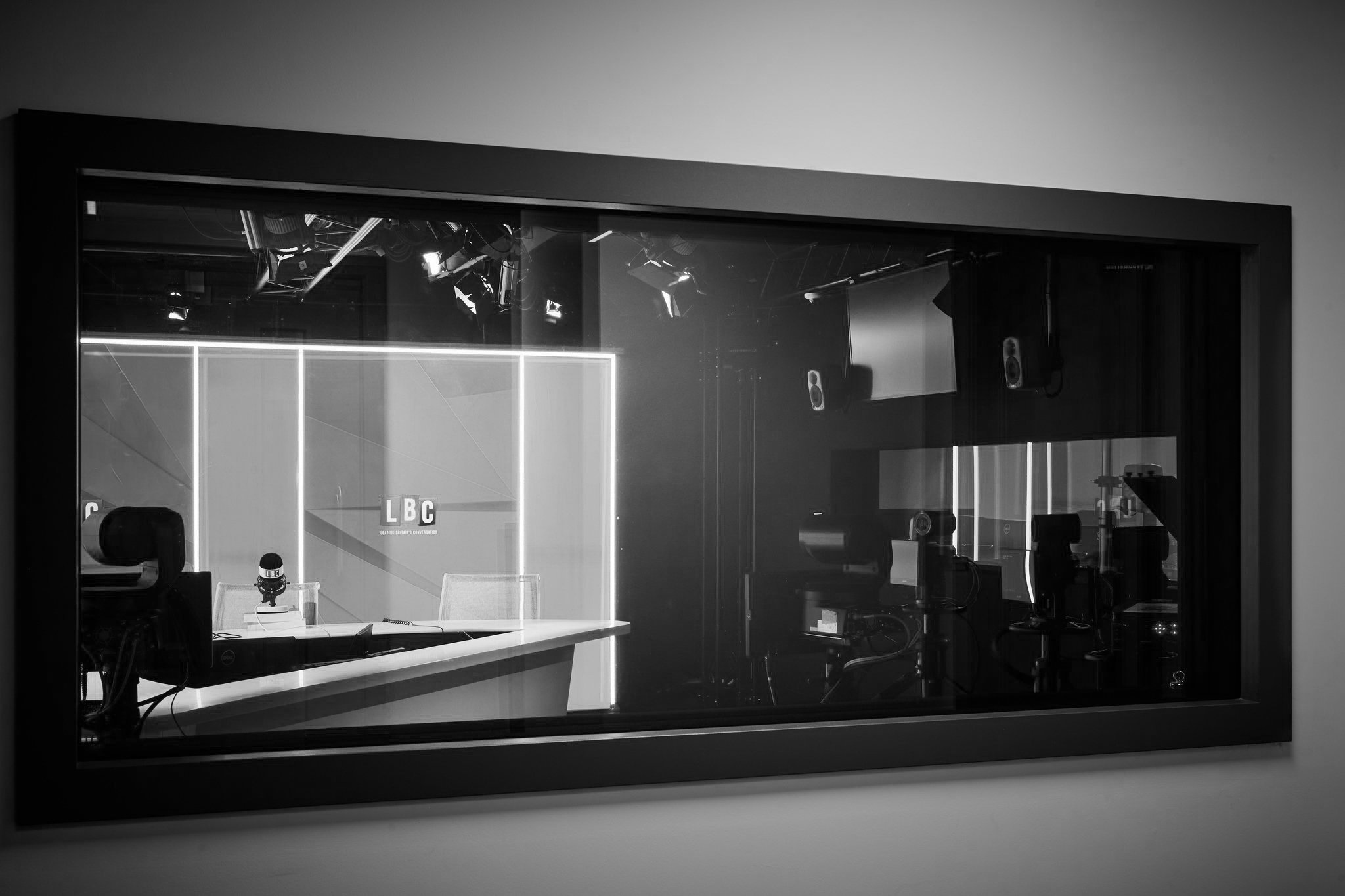
Spaces delivered: TV studios with control rooms, podcast studio, down the line booths, comms room, meeting room, open plan desk area, hair and make up rooms, reception and breakout space, kitchenette
Our role: Acoustic design and build, project and site management
Project overview
-
Global Media and Entertainment is the UK’s largest commercial radio and outdoor media group. Its portfolio includes major brands such as Heart, Capital, Smooth, Classic FM, LBC and Radio X. According to RAJAR (Q4 2024), Global’s radio stations reach around 29.2 million weekly listeners, representing a 26.9 percent share of the commercial radio market.
Combined with its outdoor network, Global’s platforms engage more than 51 million people across the UK each week.
-
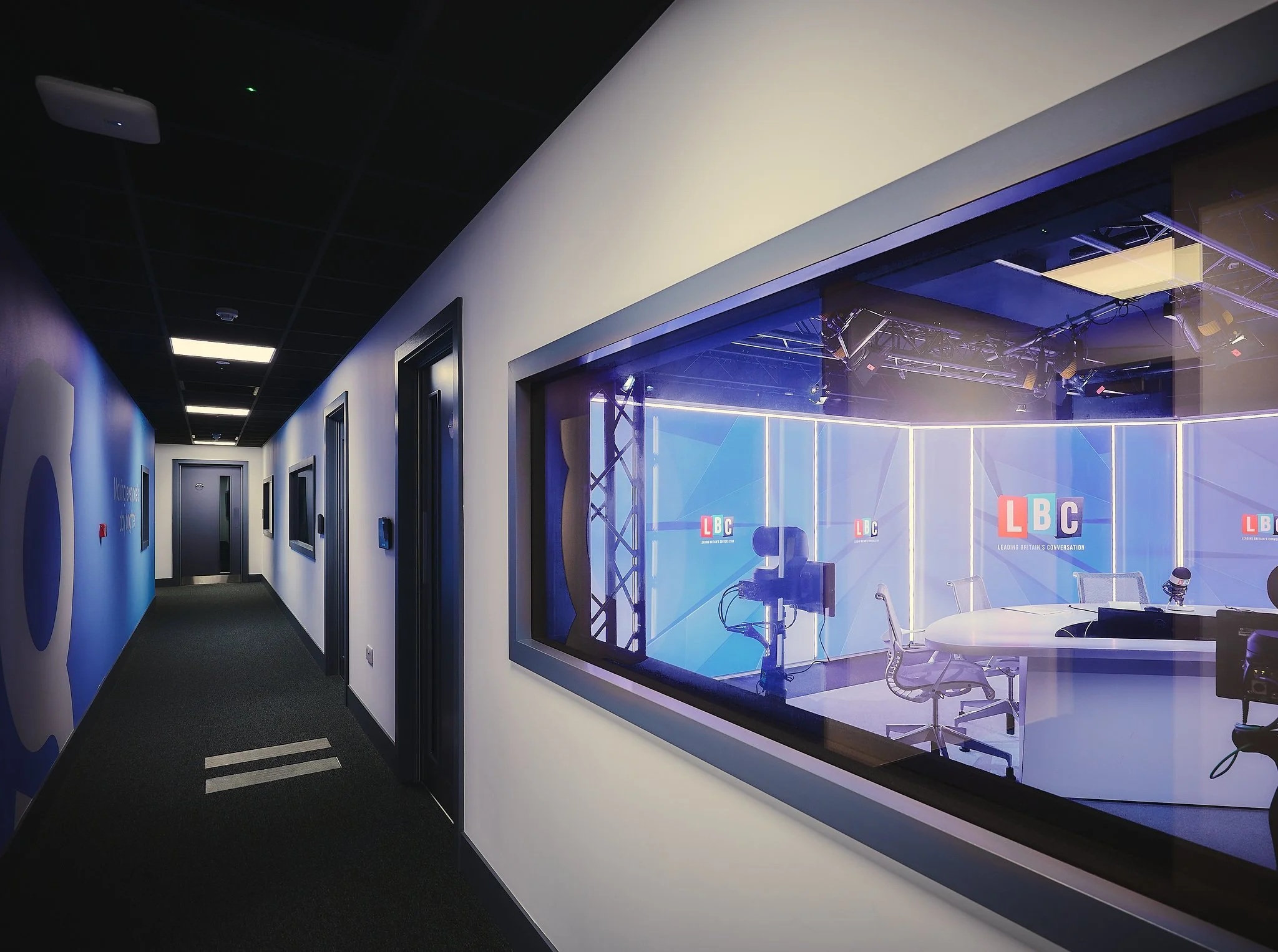
Global planned to relocate the LBC studio from the ground floor of Four Millbank to the lower ground floor, expanding the facility to include additional studios and supporting spaces across approximately 4,000 sq ft.
Accommodation schedule:
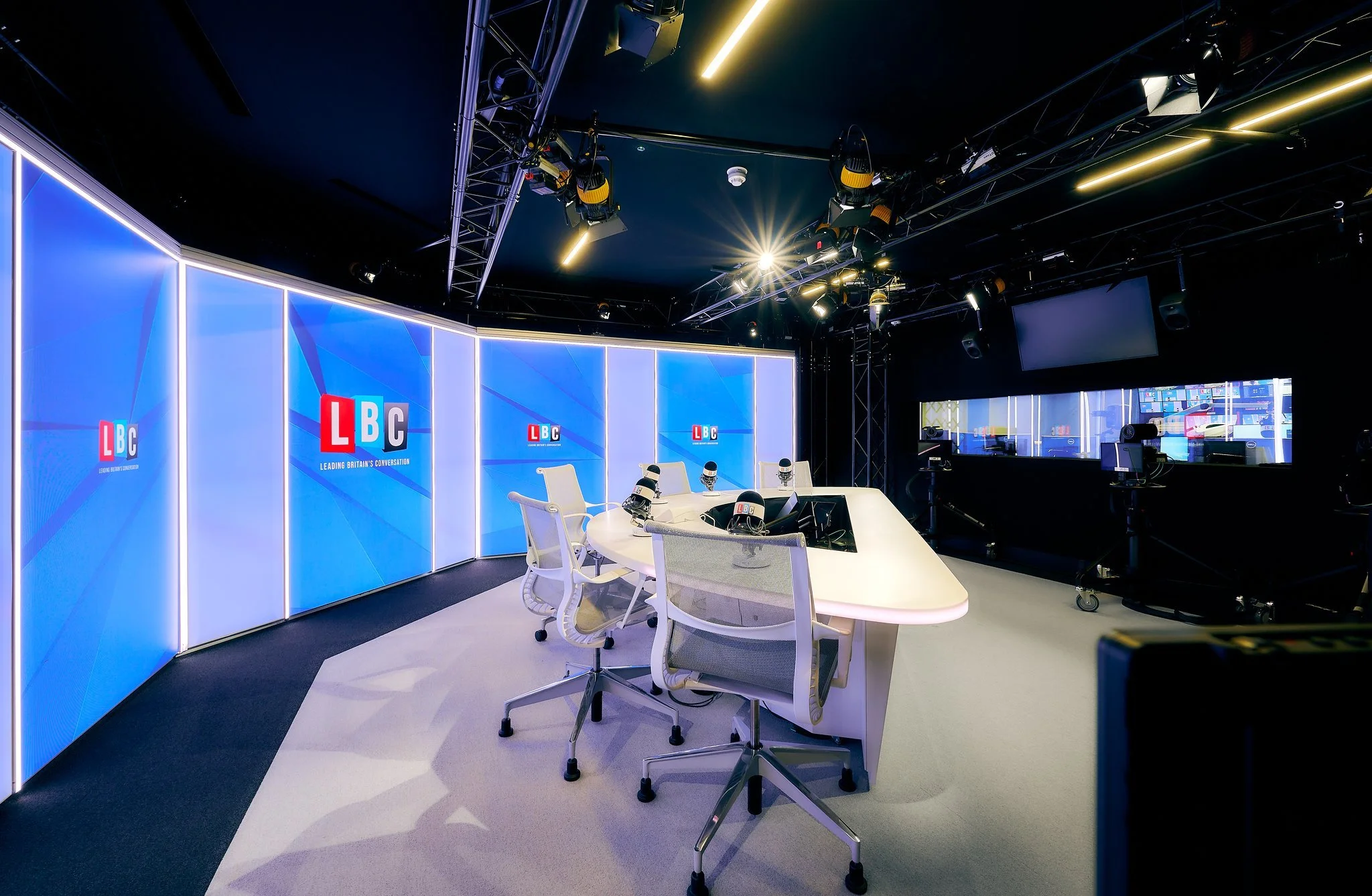
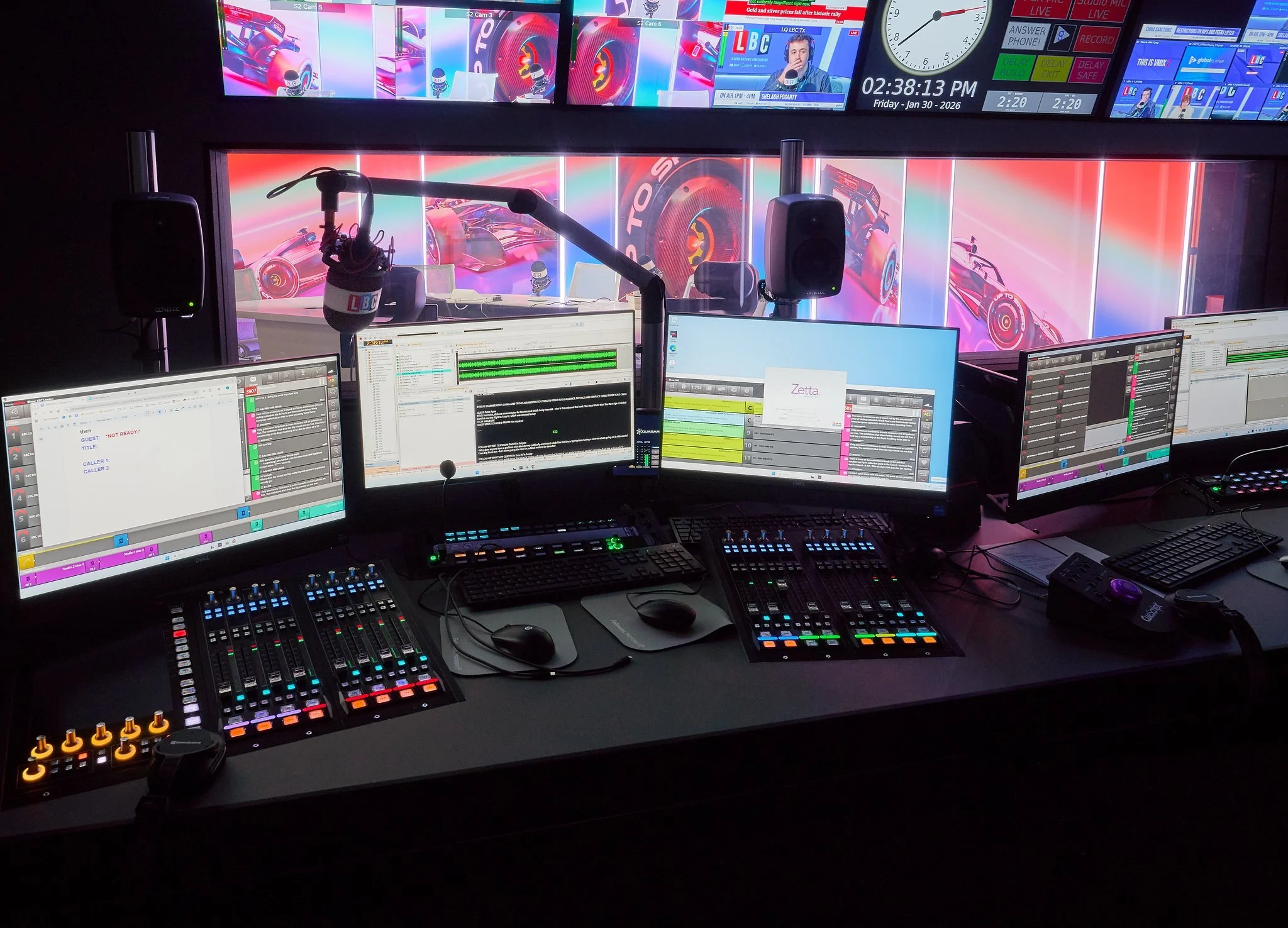
Two TV studios and control rooms
One podcast studio and control room
Two single person down the line contribution booths
Comms room
Meeting room
Open plan desk area
Hair and make up rooms
Reception and breakout area
Kitchenette
-
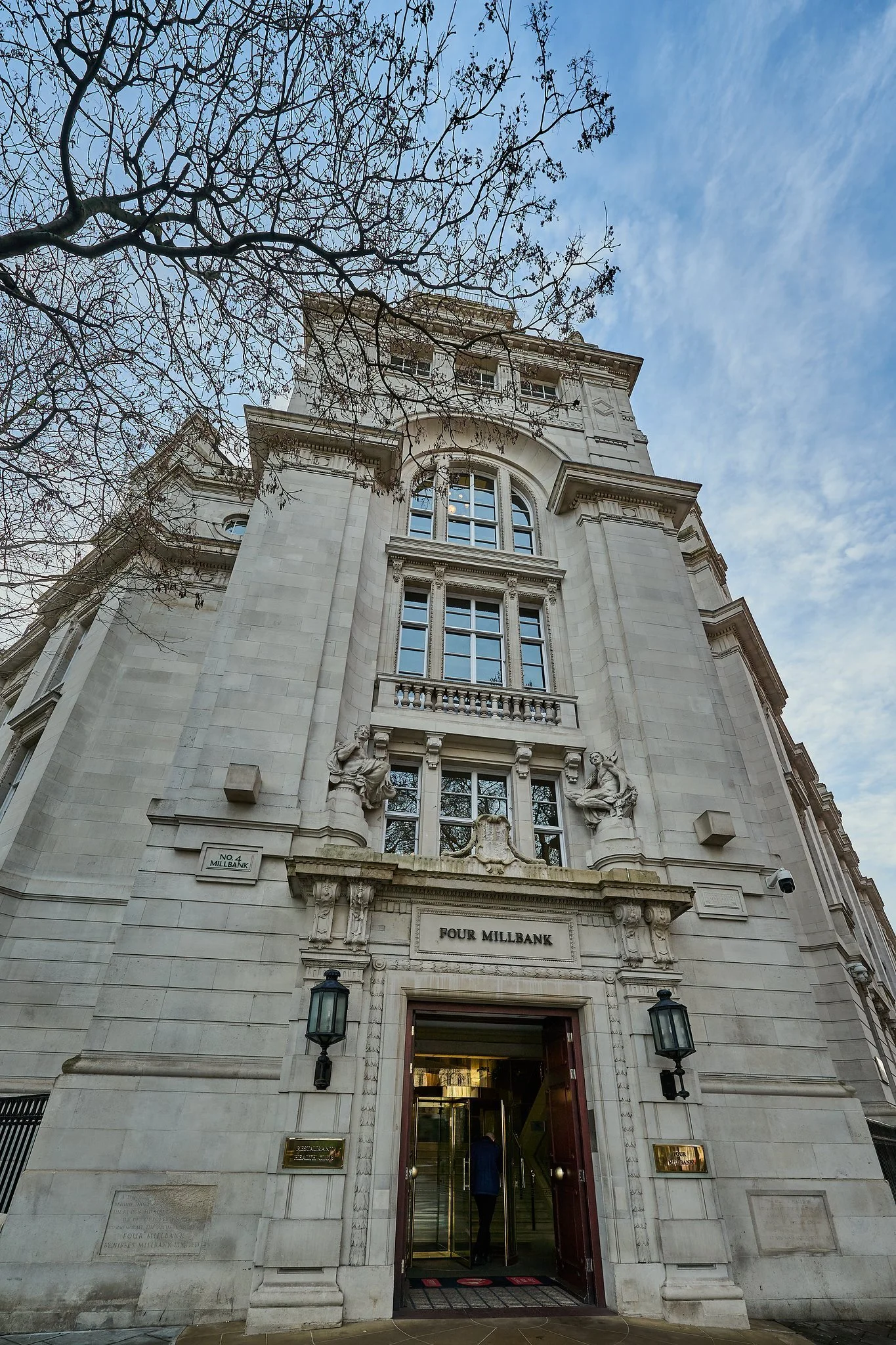
Four Millbank sits within Westminster’s parliamentary district and lies within a conservation area. The site context informed access, sequencing and how interventions were developed within the existing building. Its proximity to the Houses of Parliament and College Green has made it a practical base for live media and political journalism.
Technical highlights
-
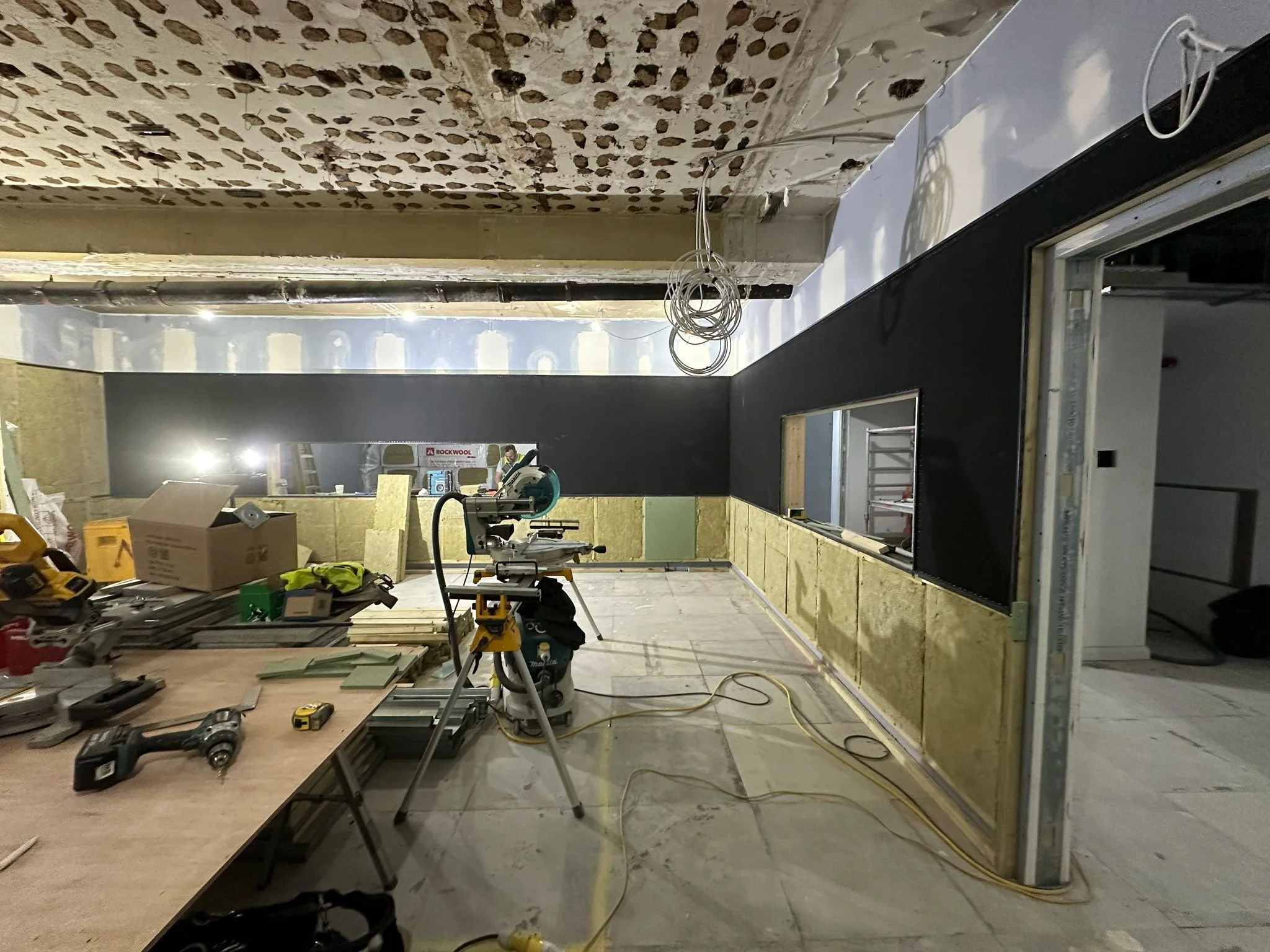
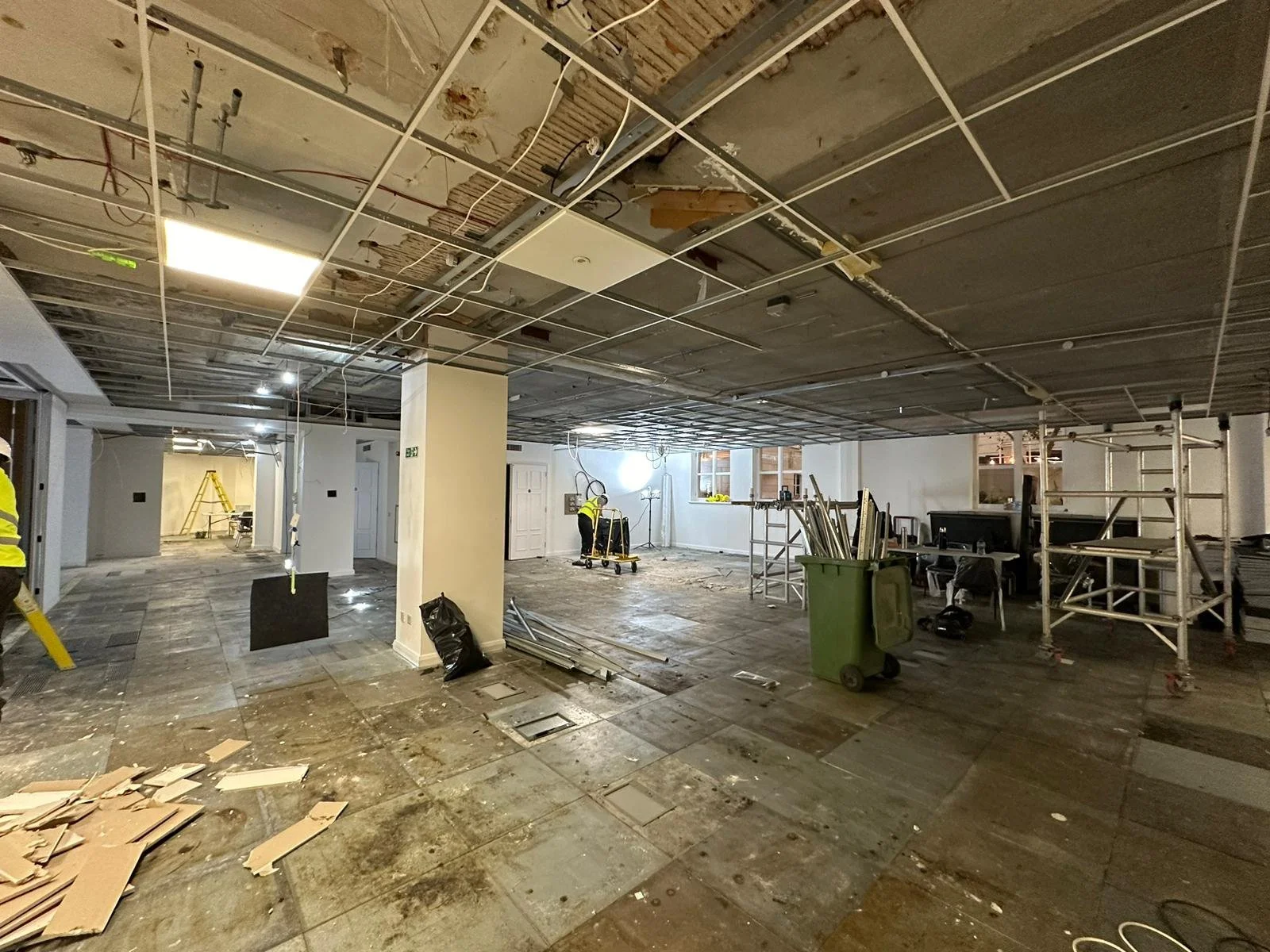
The project commenced immediately after the Christmas period, coinciding with the outgoing tenant’s move out phase. Early visits therefore took place within a functioning office environment, limiting what could be uncovered ahead of works commencing.
The acoustic survey was completed in advance, while asbestos and structural surveys were undertaken during site setup. These informed several key design decisions made in real time, without affecting the programme.
-
The lower ground floor sits within a century old steel framed building that has undergone multiple refurbishments, including significant works in the late 1980s which introduced a mix of precast concrete and hollowpot systems. Because the area was never intended to support the loads of isolated studio partitions, suspended ceilings and broadcast infrastructure, detailed structural investigations were essential.
Working with RSA Design, pilot holes and archived drawings confirmed that most studios sat above strengthened precast bays capable of supporting the proposed loads. However, several rooms were positioned over original hollowpot construction where load capacity could not be assured. Targeted strengthening was introduced using discreet steel beams spanning between the primary frame, safeguarding the building fabric while enabling the studio installations.
This investigative approach ensured the new facility could be safely integrated within a complex, historic structure.
-
During strip out, water ingress was detected in the lightwell behind the demise, traced to leaking glass pavement lights on Great Peter Street. Heavy rainfall was penetrating through the pavement lights and running directly into the lower ground space.
Because upcoming partition works would permanently seal access to this area, the issue required prompt resolution to avoid delays and protect new construction. Working with the building management team and Luxcrete, the specialist responsible for the pavement lights, the leak was confirmed as repairable externally at street level.
This allowed internal works to continue without impact on the programme and provided long term protection for the studios.
-
The project brought together several specialist contractors working within a live, multi tenanted building:
Recording Rooms led design and build
MPH delivered TV set design and installation
IPE provided broadcast systems, lighting design and technical installation
Weekly design and coordination meetings chaired by Global’s delivery manager aligned the various disciplines. Recording Rooms also produced weekly Friday video walkthroughs, highlighting progress, risks and coordination points for the wider team. Clear communication ensured that structural, architectural and building services works were sequenced accurately, enabling the technical teams to begin on site with everything in place.
-
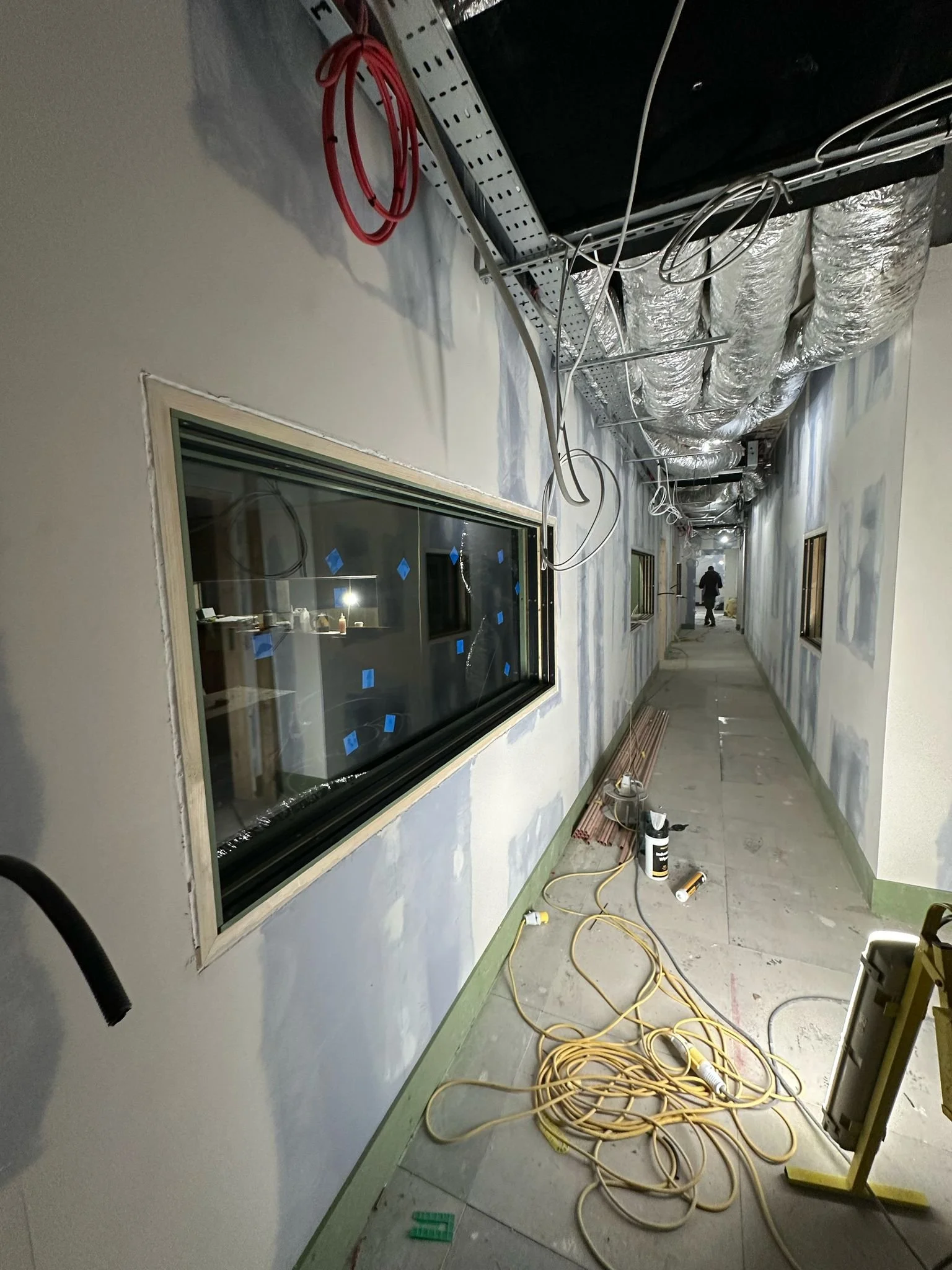
The chilled water fan coil system at Four Millbank presented a number of challenges for a broadcast environment. Because the water coil operates at a higher temperature than traditional DX systems, the units require a greater volume of air to achieve the same cooling effect. This increases fan size, airflow and the potential for noise, which needed careful management to ensure the studios and control rooms remained quiet in operation.
Space for mechanical equipment was extremely limited, and coordinating chilled water pipework and acoustic ductwork through the structure required precise setting out. To address the higher airflow, custom acoustic plenums were developed to slow and diffuse the air before it reached the discreet shadow gap outlets, removing the need for visible grilles and maintaining clean sightlines throughout the studios.
Airflow calculations helped ensure velocities remained low, avoiding turbulence or drafts within the technical spaces. Each unit was positioned accurately within the restricted mechanical zones, allowing correct operation, access and integration with surrounding services.
The installed system provides stable cooling across all rooms, with airflow controlled to deliver even, draft free distribution. Custom acoustic plenums maintain low noise levels, and chilled water pipework, acoustic ductwork and equipment were integrated within the available space without compromising acoustic performance.
-
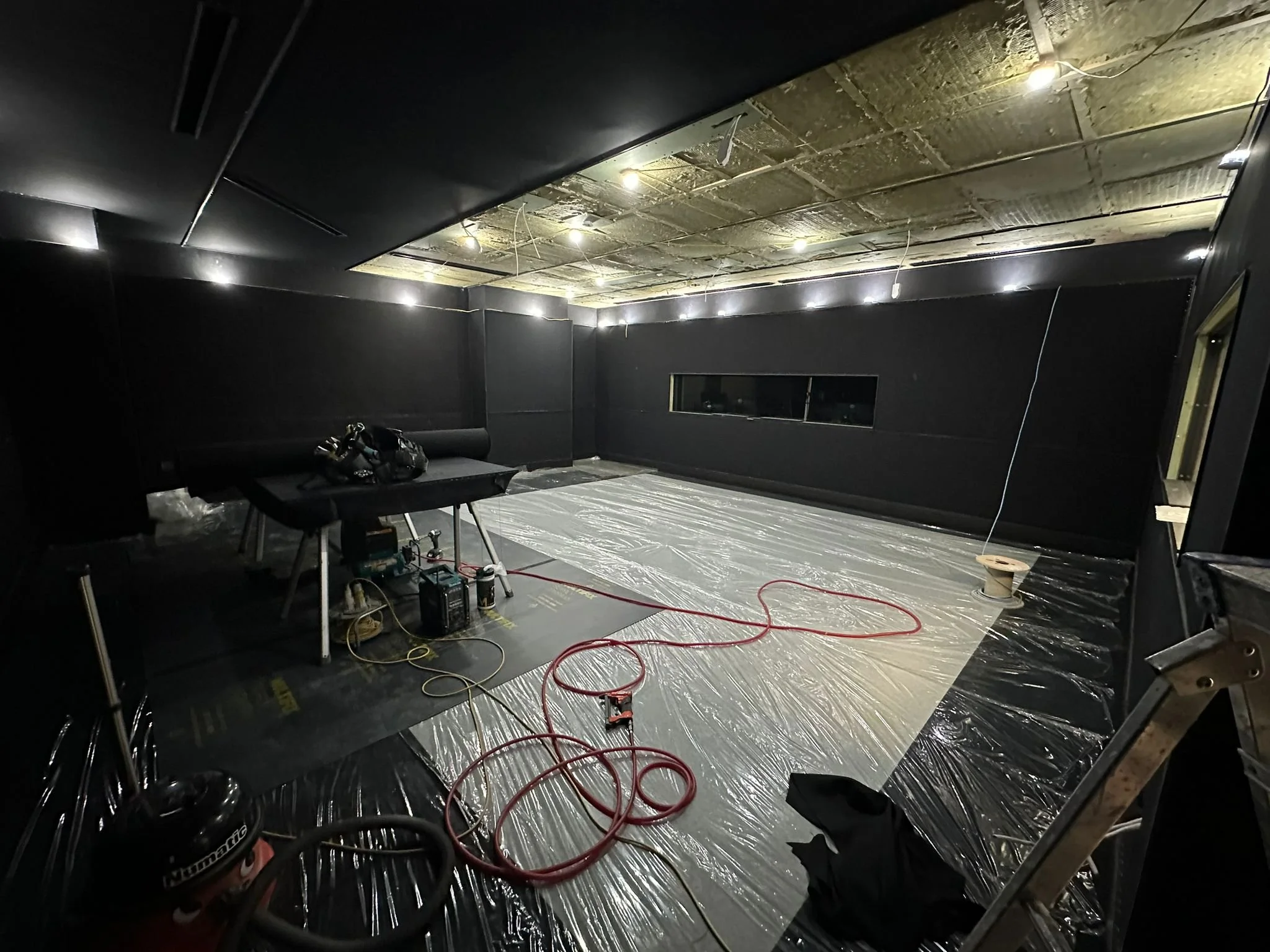
The brief was to deliver broadcast grade acoustic performance across a suite of TV, radio and podcast spaces while avoiding unnecessary over specification. Global arrived with a clear concept based on previous projects. Our task was to test that strategy against the realities of this particular building, refine it where needed and maintain agility within a compressed programme.
An initial noise survey was undertaken pre strip out to benchmark existing conditions. As parts of the structure and services were only confirmed during strip out, elements of the design were refined as site conditions became clear. The building’s varied floor build ups, from early hollowpot assemblies to later precast systems, influenced the isolation strategy and required careful verification of potential flanking paths.
Strip out revealed lower than expected isolation between the demise and the pavement lights and lightwell, and a drainage pipe running above one studio that required careful consideration. Designs around these areas were refined to ensure they did not compromise performance in critical spaces while working within the constraints of the site and available headroom.
Below the studios, the basement houses several items of plant. Their contribution to overall noise could only be meaningfully assessed as surrounding works progressed. Staged assessments allowed plant noise to be quantified accurately and informed the level of mitigation required. Where aspects of performance were influenced by areas outside the demise, solutions were developed in coordination with the landlord and building management.
Because all production in this facility is voice based rather than music based, the acoustic requirements differ from a typical music studio. This made a non fully floating solution technically appropriate, but it also meant every potential noise path required careful assessment. Our strategy focused on how adjacent rooms interact, and how each studio relates to the surrounding building, using higher spec constructions only where they delivered measurable benefit.
Acoustic data was presented in clear, colour coded diagrams, with priority given to studios located against more exposed parts of the building envelope. This supported fast, informed decisions while keeping the approach proportionate to the brief.”
Two areas were identified where a proportionate level of risk was acceptable: footfall noise from the pavement lights and lightwell, and noise transmission from basement plant. These decisions were based on clear technical evidence, with acoustic impact and cost implications set out to guide the level of mitigation required. The studios were designed to meet the requirements for voice based broadcasting, and the technical approach gives the client confidence in how the rooms will operate in use.
Delivery and collaboration
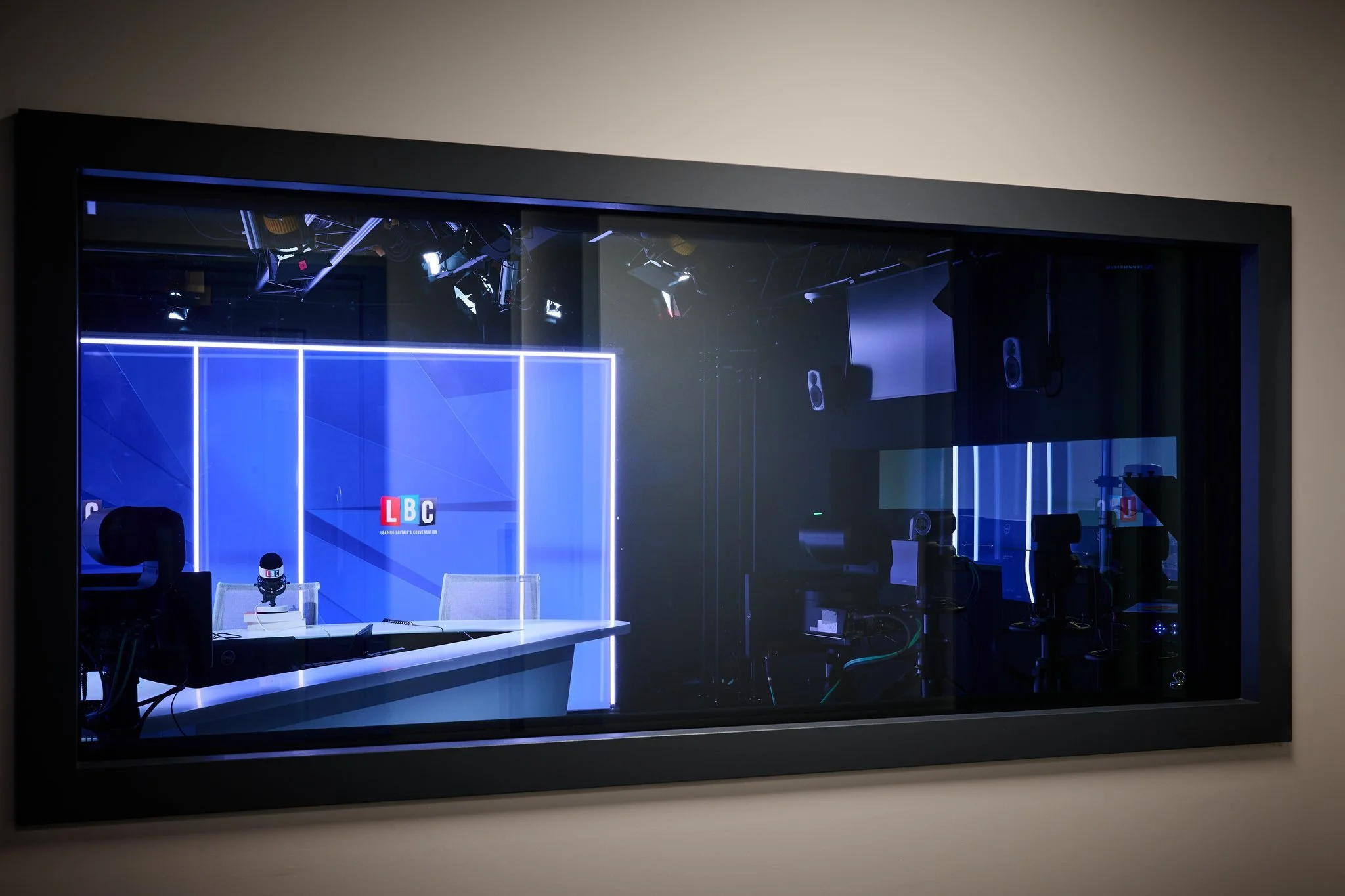
Collaboration was central to the project, with coordinated planning and clear communication across all teams. Regular design meetings, structured progress updates and close coordination helped keep the programme on track within a live, multi tenanted building.
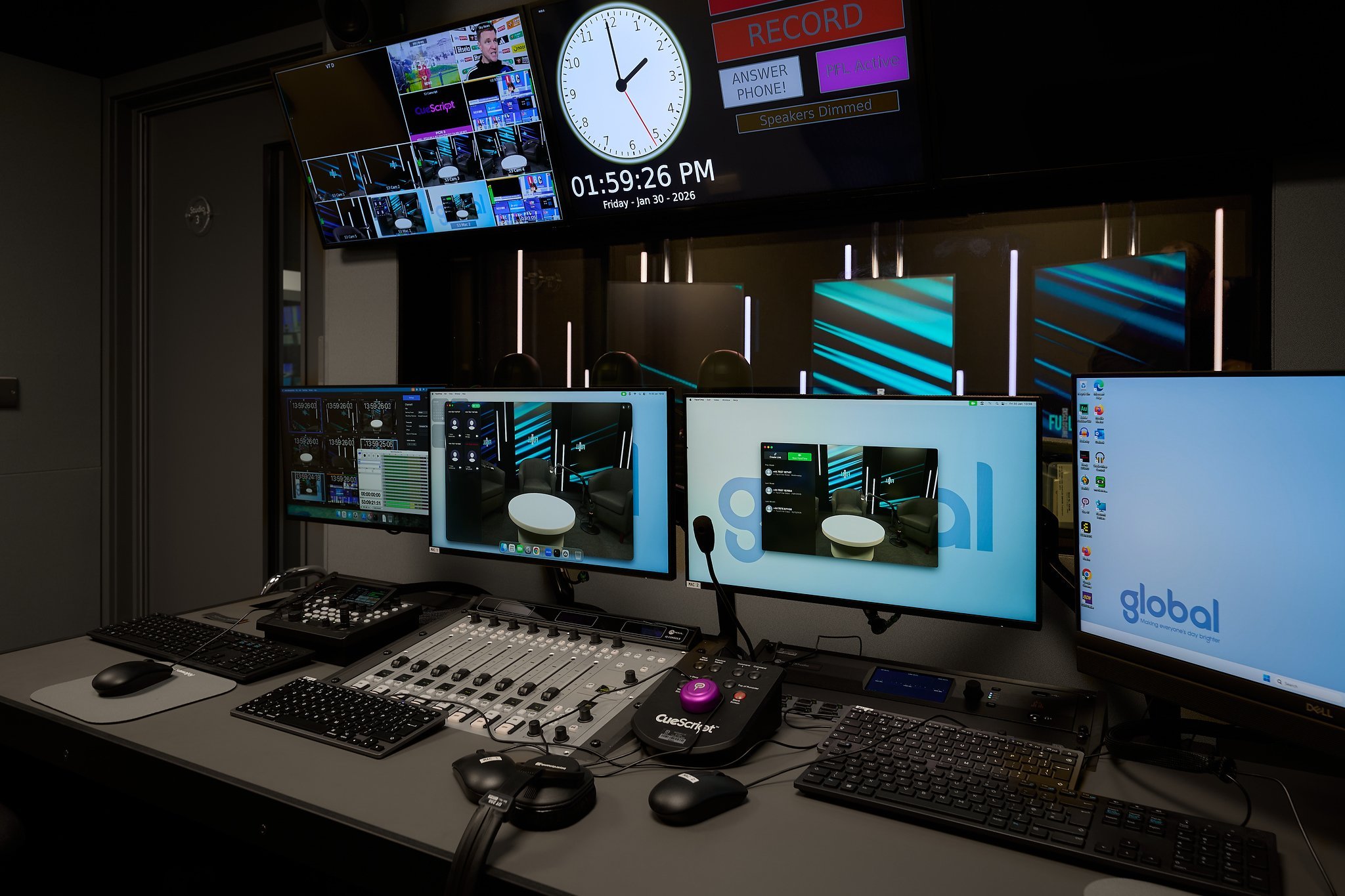
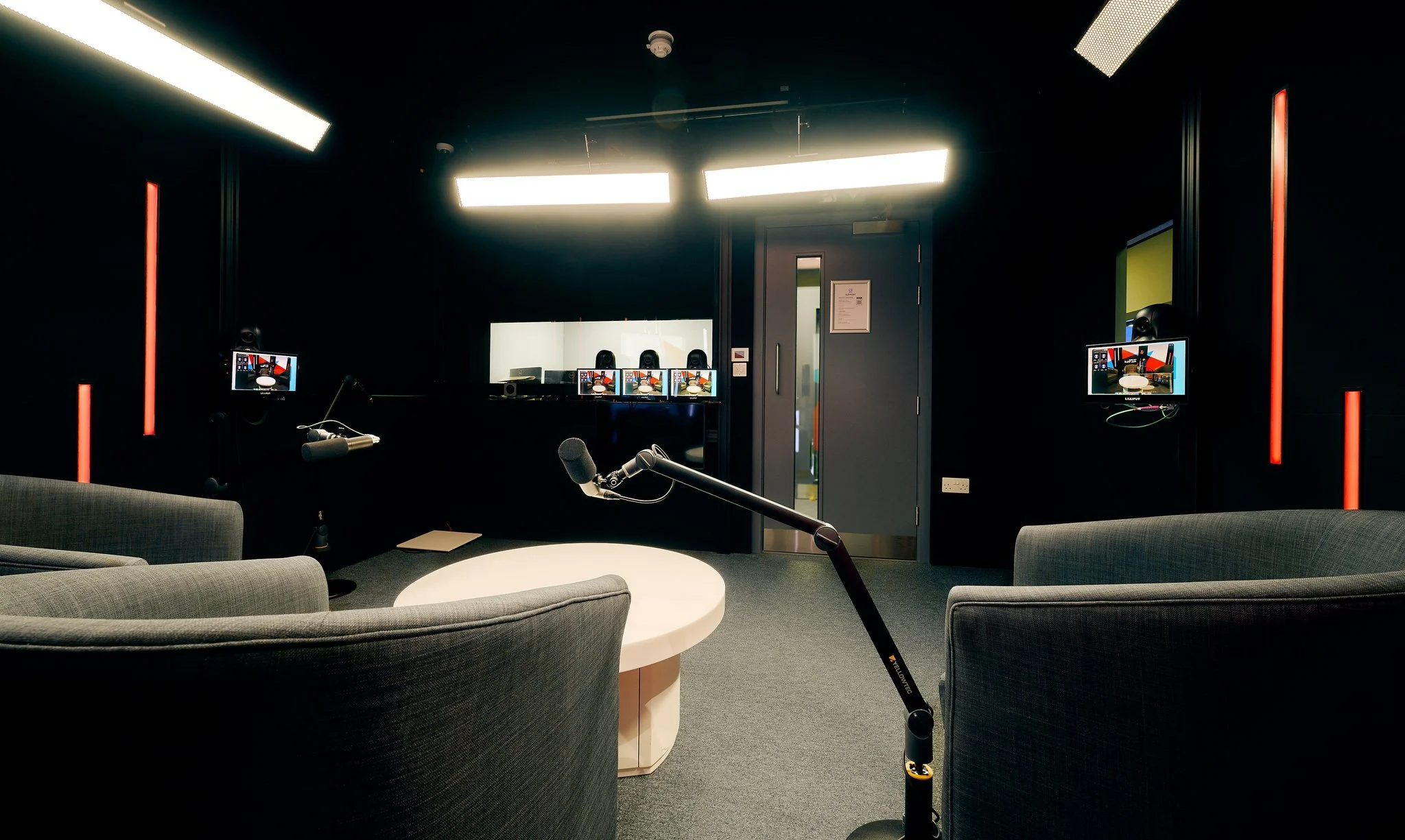
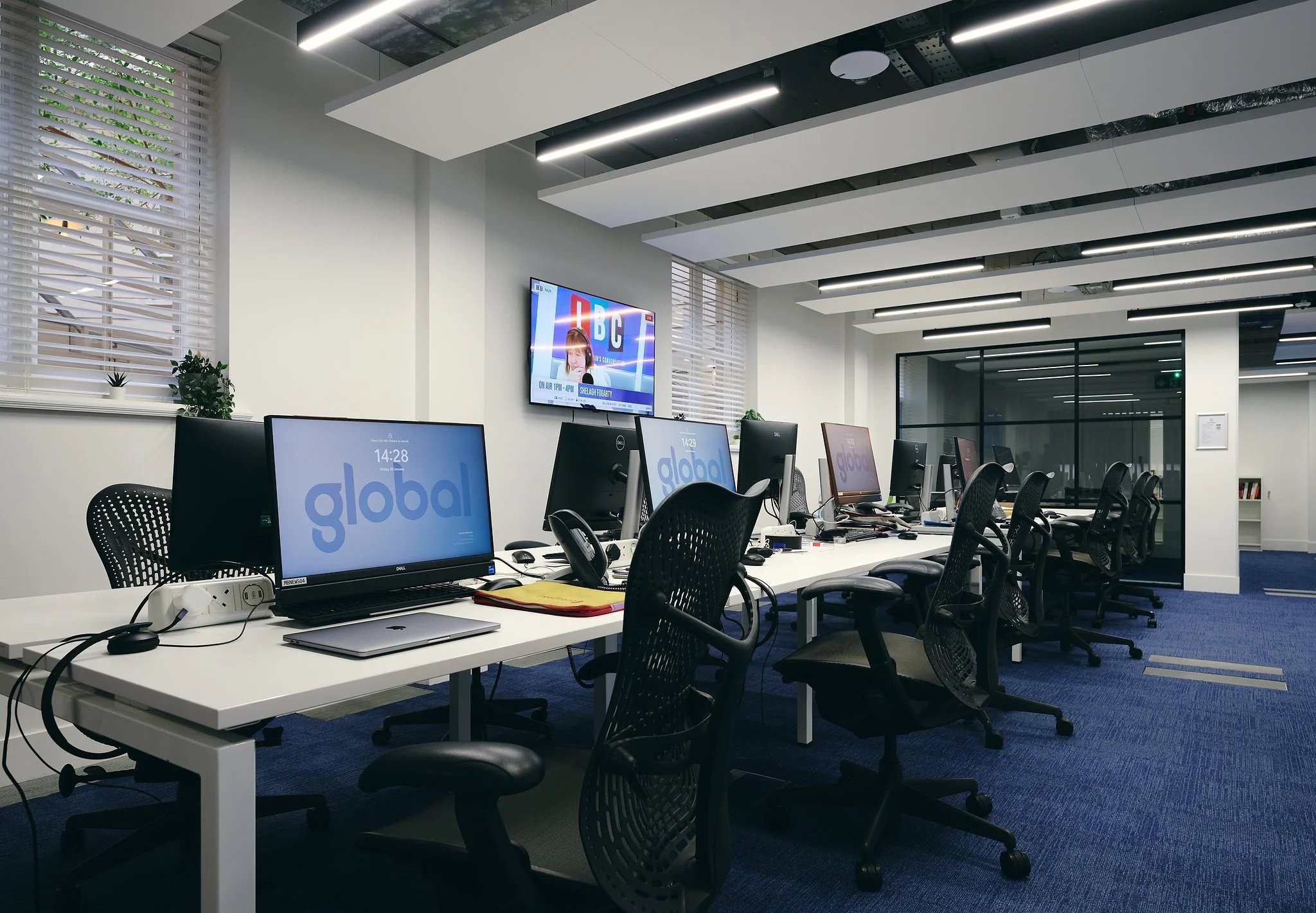
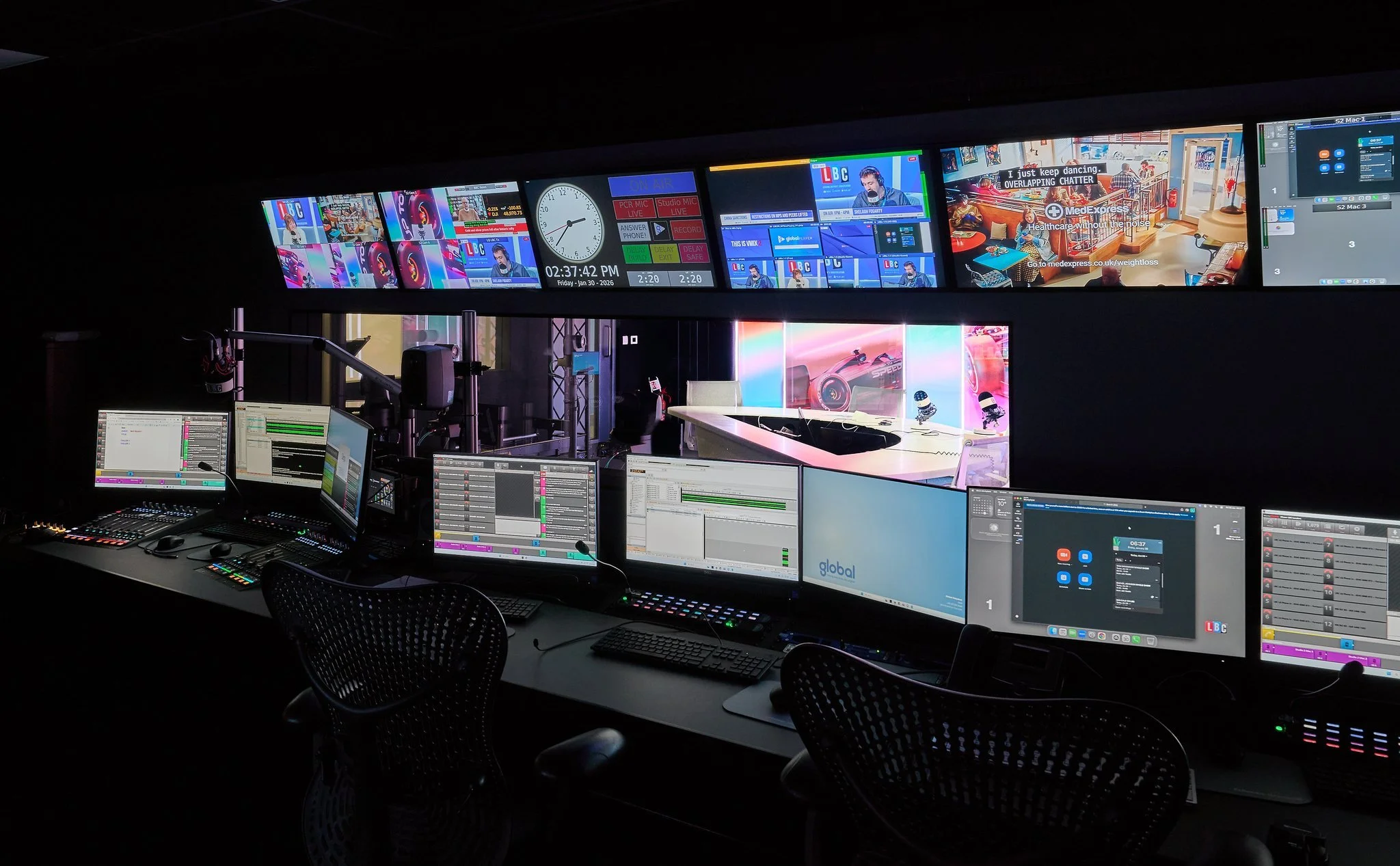
The project was well received by Global’s delivery and technical teams, who highlighted the quality of the build, attention to detail and the collaborative approach maintained throughout.
Since handover, Global has advised that the facility has been adopted quickly across the organisation, hosting a growing range of brands as onboarding continues. The facility was delivered on programme and to specification, and is now in regular use, supporting live broadcast production and ongoing content output from Westminster.
Outcome and Client Feedback
In this Radio TechCon talk, Jon Crew, Managing Engineer & Broadcast Projects at Global, shares the story behind the transformation of Global’s Millbank studios into a modern broadcast facility.
Project team
Recording Rooms: Studio design and build
Tim Coombes: Acoustic consultant
Tim Lowther: Project consultant (client side)
RSA Design: Structural engineer
S2 Partnership: Asbestos survey
Socotec: Building control
CHPK: CDM advisor
IPE and MPH: Technical specialists